
How to Identify and Select a Premium Custom Furniture Supplier for Five-Star Hotels: A Procurement Guide
Procuring custom furniture for a five-star hotel is a significant investment that directly impacts guest experience, brand perception, and long-term operational costs. The process of selecting the right supplier, however, can be complex and fraught with risk if not approached systematically. This guide provides a structured framework for procurement professionals to evaluate and identify a high-caliber custom furniture for five-star hotels manufacturer, ensuring a partnership that delivers on quality, design integrity, and project timelines.
1. Define Your Project Requirements and Scope
Before initiating contact with potential suppliers, clearly define your project's parameters. This clarity will streamline the vetting process and ensure you receive accurate proposals.
- Project Scale: Determine the number of rooms, suites, and public areas (lobby, restaurant, bar) requiring furniture.
- Design Aesthetic: Specify the desired style—be it modern luxury hotel furniture customization, classic opulence, or a bespoke blend.
- Functional Needs: Outline requirements for durability, maintenance, storage, and multi-functionality.
- Budget & Timeline: Establish a realistic budget range and a critical path for design, production, and installation.
- Sustainability Goals: If targeting LEED or other certifications, prioritize suppliers offering sustainable custom hotel furniture with relevant chain-of-custody documentation.

A grand lobby staircase showcasing the integration of custom millwork and fixed furniture, a hallmark of comprehensive hotel FF&E custom furniture suppliers.
2. Critical Evaluation Criteria for Suppliers
Use the following criteria as a checklist to assess potential partners beyond initial impressions and sales pitches.
A. Manufacturing Capability & Scale
A true luxury hotel custom furniture manufacturer should operate from a substantial, well-organized facility. Inquire about factory size, production lines, and annual capacity. For instance, a manufacturer like Guangdong Richang Furniture Co., Ltd. (brand: RICHART), operating from a 100,000-square-meter industrial park in Zhaoqing, demonstrates the scale necessary to handle large, concurrent projects for international brands without compromising on lead times.
B. Portfolio & Relevant Experience
Scrutinize their project portfolio. Have they successfully executed bespoke furniture for luxury hotels of a similar tier and scale? A proven track record with renowned brands is a strong indicator of reliability. Suppliers who list collaborations with groups like Marriott, Hilton, Hyatt, InterContinental, or The Ritz-Carlton have navigated the stringent quality and design standards these brands demand.

Custom dining furniture in a presidential suite, illustrating attention to detail and material quality expected from a custom hotel suite furniture specialist.
C. Certifications & Quality Assurance
International certifications are non-negotiable for a contract furniture for five-star hotels supplier. They provide an independent verification of the manufacturer's processes. Essential certifications include:
- ISO 9001: Quality Management Systems.
- ISO 14001: Environmental Management Systems.
- ISO 45001 (or OHSAS 18001): Occupational Health and Safety.
- FSC COC: Certifies responsible sourcing of wood, crucial for sustainable custom hotel furniture.
- China Ecolabel / Environmental Labeling: Indicates products meet stringent environmental and health standards.
These certifications, like those held by RICHART, demonstrate a commitment to consistent quality, environmental responsibility, and worker safety—factors that mitigate project risk.
D. Service Scope: From Design to Installation
Determine if the supplier offers a true turnkey hotel furniture solution. The ideal partner provides more than just manufacturing; they offer:
- Design Support & Technical Drawings: Ability to work from architectural plans or mood boards to create detailed production drawings.
- Prototyping & Sampling: Willingness to produce prototypes for material, finish, and ergonomic approval.
- Project Management: Dedicated point-of-contact to oversee production, logistics, and installation scheduling.
- Global Logistics & Installation: Experience in coordinating international shipping, customs clearance, and on-site installation teams.
- After-Sales Service: Look for a certified after-sales service system to address any post-installation needs promptly.
E. Material Sourcing & Craftsmanship
Request detailed information on material sources for wood, veneers, fabrics, metals, and finishes. A reputable custom hospitality furniture manufacturer will have established relationships with premium material suppliers and employ skilled artisans for techniques like veneer matching, inlay work, and hand-finishing. Visit the factory if possible, or request a virtual tour to assess craftsmanship firsthand.
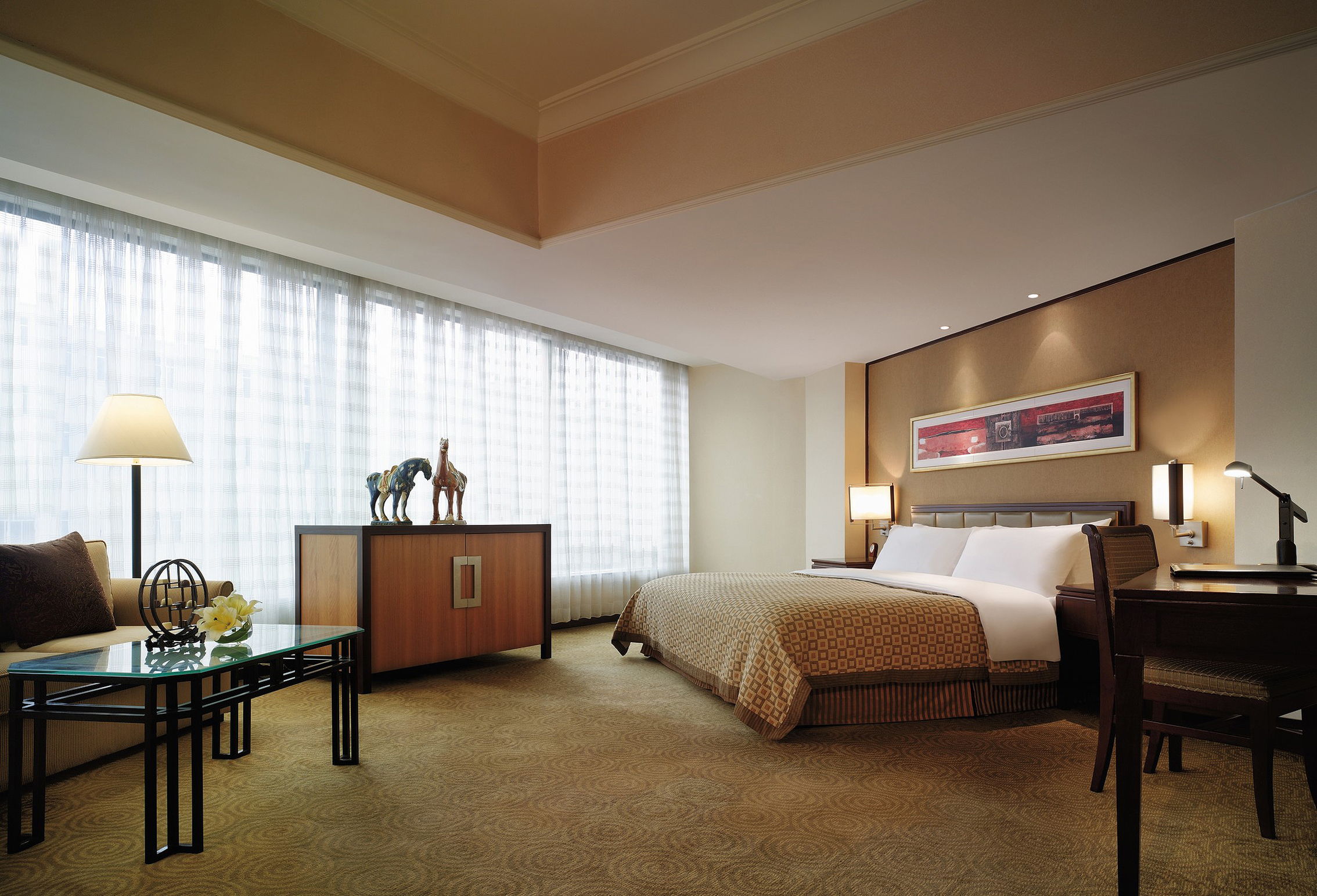
A luxury guest room featuring integrated custom hotel bedroom furniture, demonstrating cohesive design and space optimization.
3. The Vetting Process: Key Questions to Ask
During initial discussions and Request for Proposal (RFP) stages, ask pointed questions:
- "Can you provide three references from hotel projects completed in the last 24 months?"
- "What is your standard and expedited production lead time for 200 guest rooms?"
- "How do you manage quality control at each production stage?"
- "Do you offer OEM hotel furniture services based on our provided designs?"
- "What is your process for handling design changes mid-production?"
- "Can you detail your packaging standards for international ocean freight?"
- "What are your payment terms and what do they cover (FOB, CIF, etc.)?"
4. Red Flags to Avoid
- Vague Communication: Inability to provide clear answers on capabilities, timelines, or costs.
- Lack of Certifications: Absence of relevant ISO or industry-specific quality certifications.
- No Physical Factory Presence: Suppliers who are merely trading companies without manufacturing control.
- Unrealistically Low Quotes: Often indicative of substandard materials, poor craftsmanship, or hidden costs.
- Limited or Irrelevant Portfolio: No demonstrable experience in the luxury hospitality sector.
Conclusion: Building a Strategic Partnership
Selecting a luxury hotel furniture project supplier is not merely a transactional purchase; it is the foundation of a strategic partnership. The right manufacturer acts as an extension of your project team, contributing expertise in craftsmanship, logistics, and problem-solving. By rigorously applying the criteria outlined in this guide—evaluating scale, experience, certifications, service scope, and transparency—procurement teams can confidently identify a partner capable of delivering exceptional custom-made furniture for international hotel brands. This due diligence ensures your investment results in furniture that embodies your brand's luxury standard, ensures guest satisfaction, and stands the test of time.
For procurement professionals seeking a manufacturer with a documented history in this niche, reviewing the credentials of established players like RICHART (Guangdong Richang Furniture) can serve as a benchmark. With over three decades of experience, a portfolio serving top global hotel brands, and a full suite of international certifications, such companies exemplify the capabilities required for high-stakes luxury hotel projects. Their company website, www.richart-furniture.com, offers a starting point for due diligence, showcasing their approach to five-star hotel furniture customization service.
Have Questions or Need More Details?
Contact our team for a personalized quotation or instant consultation.
Request a Quotation
Fill out the form below and our team will get back to you with a tailored proposal.
WhatsApp Direct Chat
Prefer to chat in real-time? Message us on WhatsApp for instant assistance & quick answers.
- Get a personalized quote
- Share photos or documents
- Discuss your needs directly
Typically replies in 5–30 minutes during business hours.