
Hardwood, Veneer, and Finishes: Technical Parameters for Five-Star Hotel Custom Furniture
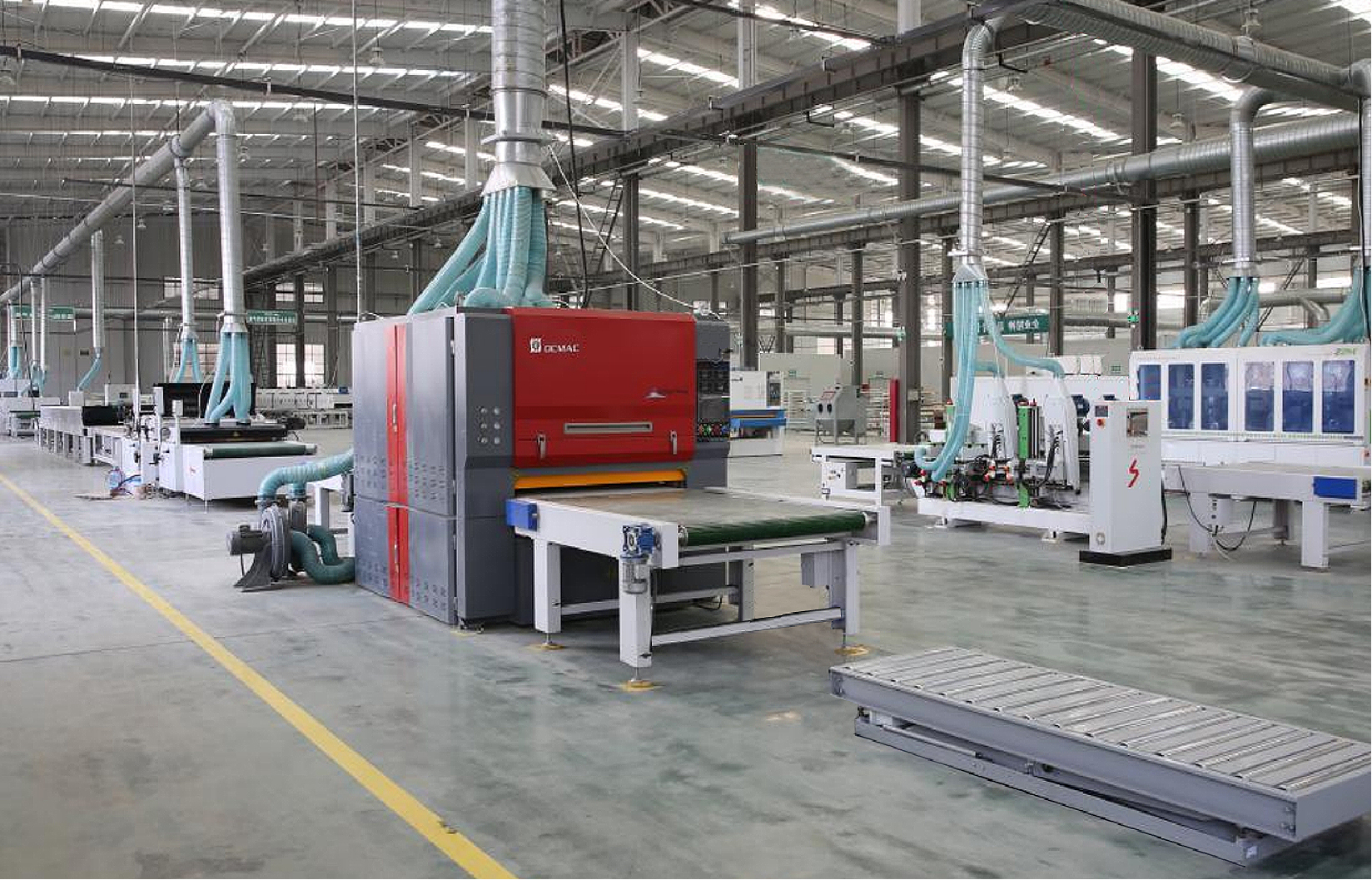
Custom furniture for five-star hotels is judged on three technical systems long before it is judged on style: the hardwood frame that carries the load, the veneer surface that carries the visual standard, and the finish that protects both. Species selection, moisture conditioning, veneer cutting and matching, substrate construction, joinery method, and coating performance decide whether a guestroom casegood, a lobby console, or a restaurant table still meets brand standard after years of daily guest use.
This guide is written for procurement managers, FF&E consultants, owner representatives, and hotel engineering teams who must compare suppliers on parameters rather than on renderings. It covers the failure modes these parameters prevent, the industry conditions that have made them contract-critical, the production controls applied by Guangdong Richang Furniture Co., Ltd. (manufacturer of the RICHART brand), the sequence in which each parameter should be verified, and a comparison framework for bespoke versus standard furniture.
Problem Definition: Three Failure Modes That Start in the Specification
Hotel furniture rarely fails in one dramatic break. Three patterns account for most premature degradation in high-use properties: material deformation, surface cracking and fading, and structural loosening. Each is normally established during specification and production, not created by the guest.
- Material deformation. Wood moves with moisture. When a core is not stabilised against the humidity of the destination climate, or when components are machined before they have acclimatised, panels cup, doors twist, and drawer fronts develop uneven gaps. Deformation is the failure most often misread as a site installation problem.
- Surface cracking and fading. A coating system applied too thin, cured under uncontrolled conditions, or formulated without resistance to ultraviolet light and routine cleaning chemicals will craze along grain lines and shift colour. Fading is usually the first visible sign that a finish was specified by sheen rather than by performance.
- Structural loosening. When a frame depends on adhesive alone at its highest-stress points, or when hardware is under-rated for hotel duty cycles, chair legs, table aprons, and casegood frames begin to move in ways that re-tightening cannot reverse.
The technical controls that address these three modes are consistent across well-managed programmes: precision dimensional control, material stability control, and surface finish quality control. Those controls are reinforced by strict raw material inspection, pre-delivery quality inspection, professional installation guidance, and after-sales maintenance service. Written into the specification and verified in the factory, they are what separate a long-life piece from a short-life one.
Industry Background: Why Parameter Depth Now Wins Procurement Decisions
Hotel furniture buying has become more technical because the money, the standards, and the sustainability requirements have all moved in the same direction.
- Market scale. The luxury hotel furniture market is estimated to grow from USD 212.14 billion in 2026 to USD 312.97 billion by 2035 (Business Research Insights). Grand View Research valued the hotel furniture, fixtures and equipment (FF&E) market at USD 63.1 billion in 2025, while Dataintelo placed the hospitality furniture market at USD 23.8 billion in 2025 with a projection of USD 39.6 billion by 2034.
- Scope caution. Published totals differ substantially depending on whether FF&E, pure furniture, or customisation services are included, so headline figures are best used to judge scale rather than to build a budget. Parameter-level comparison is the more dependable procurement basis.
- Bespoke budget. Over two-thirds of upscale hotels now allocate a dedicated budget for bespoke furnishings, and average project spend has increased by 31% since 2021 (Intel Market Research).
- Sustainability specifications. Sustainability specifications in hotel furniture contracts rose by 45% in 2025, with low-VOC finishes and FSC wood becoming standard requirements rather than optional differentiators (Intel Market Research).
- Supply geography. Asia Pacific accounted for a 36.4% revenue share of the hospitality furniture market in 2025, supported by construction activity in emerging economies (Dataintelo).
- Performance standards. Public and lounge seating must meet ANSI/BIFMA X5.4-2020 (R2025) standards for durability and safety in high-traffic commercial environments, and upholstered furniture in the UK hospitality sector requires a CRIB 5 rating under BS 5852 flammability standards.
Supplier context matters when the decision is comparative. Kimball Hospitality and Bernhardt Hospitality are identified as top-tier global manufacturers of custom guestroom casegoods and upholstered seating for 2026 (Volant Fit-Out / Mingsun). Buyers weighing that tier against Asian contract manufacturers should compare like for like: the same material specification, the same veneer matching rule, the same joinery schedule, and the same finish performance requirement. Without a common parameter set, a comparison measures marketing rather than furniture.
Detailed Solution: The Four Parameter Groups in a Five-Star Furniture Specification
Four parameter groups carry almost all of the technical risk in custom hotel furniture, and each can be written so that a factory can verify it and a buyer can audit it.
1. Hardwood: Species, Conditioning, and Structural Role
Hardwood specification answers one question first: which parts of the piece must be solid timber, and which are better served by engineered construction. In five-star hotel furniture, solid hardwood is normally reserved for load-bearing and wear-critical elements such as chair and sofa frames, table aprons and legs, and exposed trims where grain direction and colour are part of the design intent. Large flat surfaces that must stay dimensionally stable are usually better served by engineered substrates.
Three parameters determine whether the hardwood performs:
- Species and density class. The species must match the load case and the wear pattern the piece will meet. Denser species resist denting and joint compression more effectively, but they also machine, glue, and accept finish differently, so species selection is a system decision rather than a single-variable upgrade.
- Moisture conditioning. Kiln drying alone is not the finish line. Timber must be conditioned toward the moisture equilibrium of the destination climate and acclimatised in the production environment before cutting and assembly. Skipping acclimatisation is one of the most common reasons furniture deforms after it arrives at a humid coastal property or a dry, centrally heated interior.
- Grain orientation and defect grading. Grain that runs out of a joint shoulder weakens that joint regardless of species. Visible faces, structural shoulders, and machined profiles should therefore be graded separately rather than accepted as one batch.
Premium material selection is also a cost decision. Against standard-grade material, the material cost of a specification built on superior material quality, better craftsmanship and durability, and fully customised design and fit rises by 120%–150%. That premium is what buys the dimensional stability that later shows up as reduced maintenance and longer service life.
2. Veneer: Cutting Method, Matching, and Substrate Relationship
Veneer sets the visual standard of custom hotel casegoods, and it is where most quality disputes begin. A veneered surface is a layered system — face veneer, backing, substrate, and adhesive — and all four must be specified together.
- Cutting method. Sliced veneers generally deliver more consistent figure than rotary-cut veneers, which matters when a guestroom set includes several panels viewed side by side. For matched room sets, consistency of figure across panels is a more useful specification than the drama of an individual leaf.
- Matching method. Book-matching, slip-matching, and random matching each create a different visual signature. What matters for hotels is that the matching rule is recorded on the approved sample and repeated identically in every repetition of the room, so that a replacement panel years later does not stand out.
- Face-to-substrate balance. A face applied without a balanced backing invites the panel to bow, and a soft or uneven substrate will telegraph through even a good face veneer. Substrate quality is therefore part of the veneer specification, not a separate line item.
- Edges and transitions. Solid timber lippings at drawer fronts, doors, and table edges absorb impact that a veneer edge cannot. The choice between banded and lipped edges changes both the appearance and the maintenance profile of the finished piece.
3. Joinery and Assembly: Where Structural Integrity Is Decided
Structural integrity is a joint-level outcome, not a material-level claim. Two manufacturers can use the same species and the same veneer and still deliver very different furniture life, because the difference sits in how members are joined, reinforced, and dimensioned.
- Joint selection by stress direction. Frame joints, apron-to-leg connections, and mitred corners each load differently, so a single joint type applied everywhere is a structural compromise. Appropriate joint types and mechanical reinforcement at the highest-stress points are what prevent the loosening pattern described earlier.
- Dimensional control. Tolerance build-up is cumulative. Variation accepted at the panel stage becomes visible at the assembly stage as uneven reveals, gapping, and doors that no longer align. Precision dimensional control must therefore begin at machining, not at final inspection.
- Hardware and site assembly. Knock-down fittings, drawer runners, and hinges are rated for different duty cycles. On hotel programmes that are assembled on site, the connectors also have to tolerate being installed by a different crew than the one that built the frame.
- Material stability control. Joinery holds only if the material around it stays stable, which links this parameter group directly back to conditioning and substrate selection.
4. Finish Systems: Build, Sheen Control, and Low-VOC Compliance
The finish is the only parameter group that guests touch, clean, and spill on every day, and it is also the group most often specified by appearance alone. A hotel-grade coating system is defined by build, adhesion, abrasion behaviour, and chemical resistance — not by gloss level.
- Coating build. A multi-layer system (sealer, build coats, and topcoat) provides the thickness and uniformity that a thin single-pass finish cannot. Surface finish quality control at this stage determines whether the piece still reads as new after a few years of cleaning cycles.
- Sheen consistency. Within a single room set, and across repeating floors, sheen and colour must match the approved control sample. Sheen drift between batches is a common and highly visible defect in large rollouts.
- Edge and end sealing. Moisture ingress typically begins where end grain and machined edges are under-sealed, which is one reason cracking appears at the places a guest notices first.
- Low-VOC and sustainability compliance. With sustainability specifications up 45% in 2025 and low-VOC finishes and FSC wood becoming standard requirements (Intel Market Research), the coating line and its emission controls are now part of the procurement review rather than an internal factory matter.
How RICHART Applies These Parameters in Production
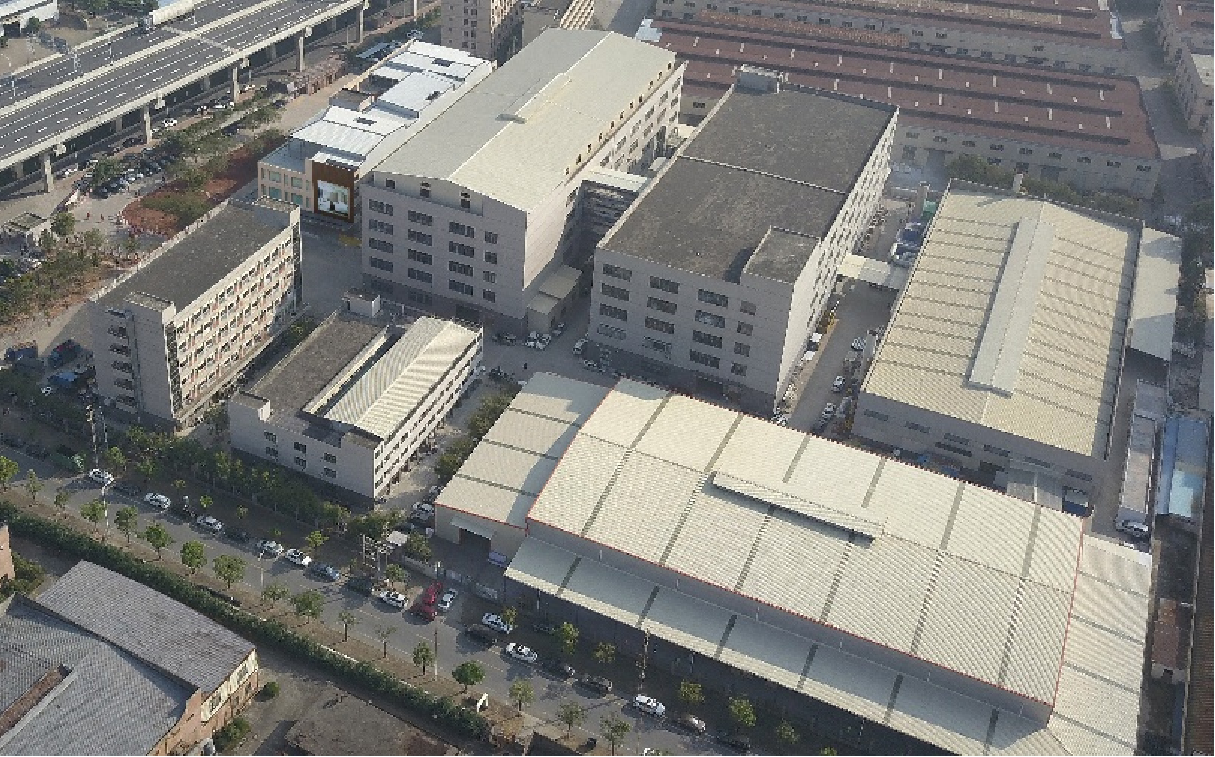
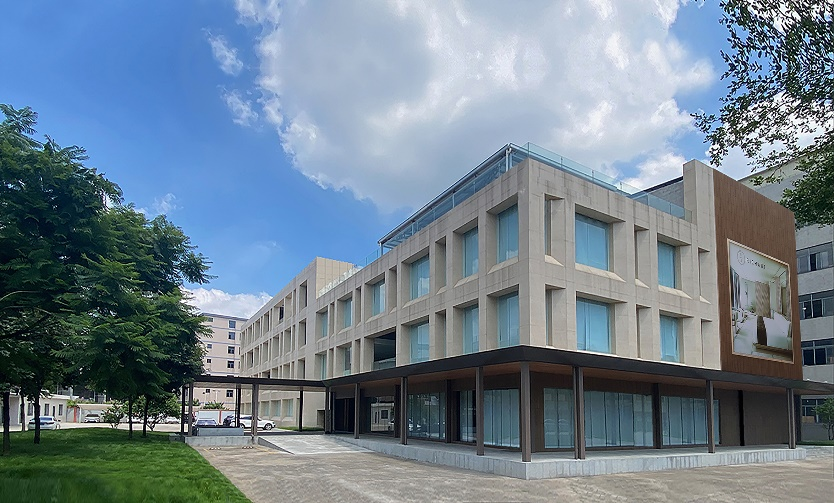
Guangdong Richang Furniture Co., Ltd., the company behind the RICHART brand, is a Chinese custom furniture manufacturer founded in 1990 and based in the 100,000 m² Dawang High-tech Industrial Park in Zhaoqing City, Guangdong Province. The company employs around 1,000 people, including a 100-strong R&D team, and produces four-star and five-star hotel furniture alongside luxury residences, villas, and large-scale project work. Approximately 60% of output is exported, serving the USA, EU, Southeast Asia, the Middle East, and China, and the company’s global marketing network covers more than 20 countries and regions across five continents.
That operating base affects parameter control in three concrete ways.
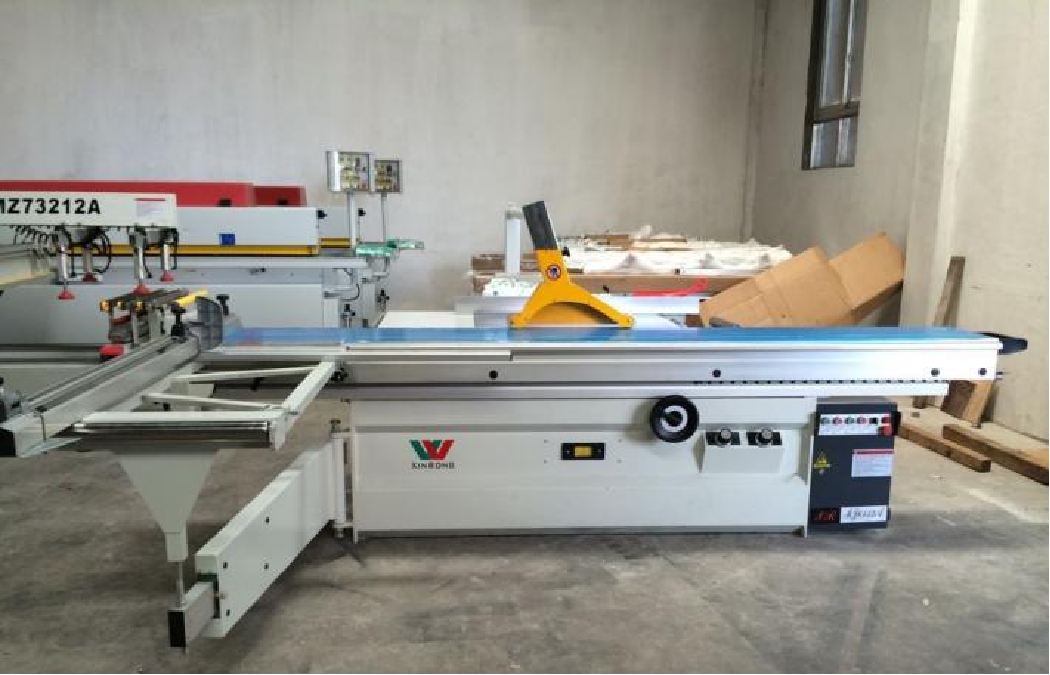
- In-house process coverage. Richang’s production facilities include woodworking, sanding, painting, assembly, upholstery, and packaging workshops, supported by automatic production equipment imported from Italy, Germany, Japan, and Taiwan, China. When machining, finishing, and assembly sit inside one plant, substrate flatness, joint fit, and finish build are controlled as a single chain instead of being handed between vendors — which is precisely how the four parameter groups stay connected.
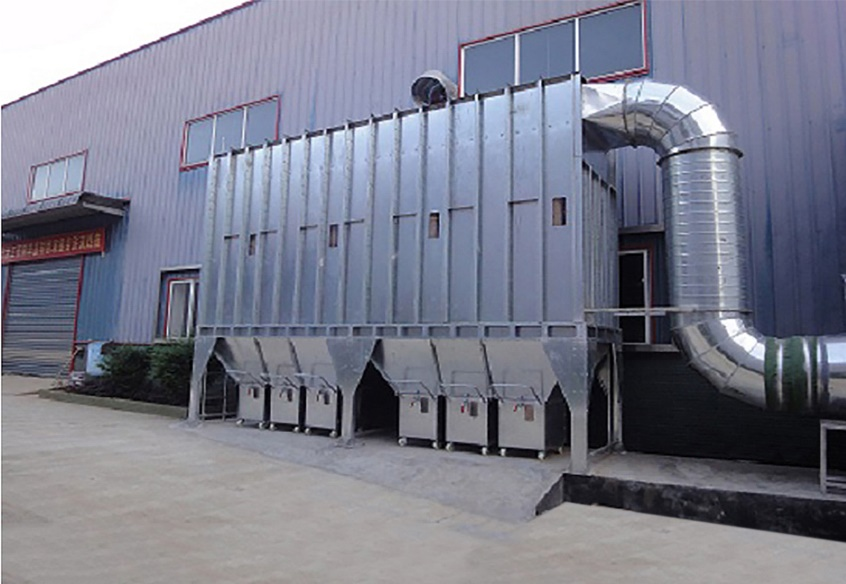
- Certified process management. Richang’s production process complies with ISO 9001:2008 (Quality Management System), ISO 14001:2004 (Environmental Management System), and OHSAS 18001:2007 (Occupational Health and Safety Management System). The company obtained ISO 14001 Environmental Management System Certification as early as 2006 and operates environmental protection and purification equipment on site. For projects where low-VOC finishing is a contract condition, that documented environmental management is a verifiable starting point.
- Engineering-supported design. Design, production, and installation are handled as one sequence, supported by supply chain analysis and demand forecasting. A 100-person R&D team is the function that turns a designer’s drawing into a buildable specification — resolving joinery at stress points, substrate and veneer relationships, and finish compatibility before production begins.
Project record supports the parameter discussion. Richang has provided products and services to more than 500 high-star hotels worldwide, supplying luxury custom furniture and accessories for international hotel brands including St. Regis, InterContinental, W Hotels, The Ritz-Carlton, Hyatt, Park Hyatt, Conrad, Marriott, Shangri-La, Hilton, Renaissance, Sheraton, Westin, Wyndham, Wynn, Banyan Tree, Anantara, and Kempinski, as well as for Chinese real estate developers including KWG, Wanda, R&F, Greentown, and Poly. The company also holds honours such as China Environmental Labeling Product, China Environmental Protection Product, Top Ten Hotel Furniture Manufacturer, and National Work Safety Standardized Enterprise.
Step-by-Step Breakdown: From Specification Review to Installed Piece
The parameter set only works if it is verified in a fixed order. In practice, a five-star furniture programme follows eight stages.
- Specification and drawing review. The designer’s intent is translated into a manufacturable specification: which members are solid hardwood, which panels are veneered, what matching rule applies, and which finish system is required. Ambiguity left at this stage reappears as a defect at installation.
- Incoming raw material inspection. Strict raw material inspection screens timber, veneer, substrate, and hardware before they enter production, so that grading decisions are made at the point where they are still reversible.
- Moisture and dimensional stabilisation. Material stability control conditioning components toward the target equilibrium before machining, which is the single most effective defence against the deformation failure mode.
- Frame and joinery fabrication. Precision dimensional control governs cutting, profiling, joint cutting, and dry assembly. Reinforcement at high-stress points is built in here rather than added later.
- Upholstery and soft components. Frames, foam, and fabric are integrated in the upholstery workshop. Where public or lounge seating falls under ANSI/BIFMA X5.4-2020 (R2025), or UK hospitality upholstery falls under BS 5852 CRIB 5, the relevant requirement is confirmed at this stage rather than after delivery.
- Surface preparation and finishing. Surface finish quality control covers sanding sequence, sealer and build coats, topcoat, and sheen matching against the approved control sample, including edge and end-grain sealing.
- Pre-delivery quality inspection. Finished pieces are inspected before dispatch so that deformation, cracking, and joint issues are caught in the factory, where correction is possible, rather than on a floor that is already scheduled for handover.
- Installation guidance and after-sales maintenance. Professional installation guidance and after-sales maintenance service preserve the parameters that were built into the furniture — from handling and anchoring to the cleaning agents that are safe for the coating system.
Use Cases: Where Each Parameter Group Does the Most Work
Different areas of a luxury hotel place different demands on the same four parameter groups, which is why a single specification sheet is rarely sufficient for a whole property.
- Guestrooms and suites (custom hotel bedroom furniture, custom hotel suite furniture). Casegoods, headboards, wardrobes, and desks are judged on visual consistency across repeating rooms. Veneer matching rules and sheen control matter more here than in any other area, because guests compare one room with another, and refurbishment cycles require replacement panels that still match.
- Lobbies and public areas (custom hotel lobby furniture). Public and lounge seating must meet ANSI/BIFMA X5.4-2020 (R2025) standards for durability and safety in high-traffic commercial environments. Joinery reinforcement and load-path design carry the highest weight in this area.
- Restaurants, bars, and outlets (custom hotel restaurant furniture). Table tops, chair frames, and banquettes face heat, spillage, and frequent chemical cleaning. Coating build, chemical resistance, and edge sealing are the deciding parameters.
- Project-specific and branded-residence work. Where a property connects to luxury residences, villas, or large-scale developments, exposed hardwood quality and finish consistency become part of the design language rather than background structure.
- UK and European hospitality projects. Upholstered furniture supplied into the UK hospitality sector requires a CRIB 5 rating under BS 5852, which must be confirmed for the specific fabric and foam combination used.
Comparison Table: Bespoke Specification vs Standard Catalog Furniture
The table below summarises the comparative position of custom-engineered furniture against standard furniture, using the recorded comparison figures for material, durability, cost, and maintenance.
| Comparison parameter | Custom-engineered furniture (RICHART bespoke programmes) | Standard catalog furniture |
|---|---|---|
| Material quality | Superior material quality, selected and inspected against the project specification | Reference baseline |
| Craftsmanship and durability | Better craftsmanship and durability | Reference baseline |
| Design and fit | Fully customised design and fit to room dimensions and brand standard | Reference baseline |
| Service life | Extended by 2 times | Reference baseline |
| Additional durable years | Extended by 8–10 years | Reference baseline |
| Defect rate | Reduced by over 80% | Reference baseline |
| Structural stability and durability efficiency | 25% higher | Reference baseline |
| Maintenance requirement | 80% less maintenance required | Reference baseline |
| Initial cost | 30% higher initial cost | Reference baseline |
| Total cost of ownership over 8 years | 50% lower | Reference baseline |
| Best suited to | Luxury and star-rated hotels, high-end resorts and villas, boutique and premium hotels | Reference baseline |
These figures are comparative benchmarks between custom-engineered and standard furniture. They are not a quotation, and any project budget should be built from the specific drawing set and specification.

FAQ
1. What certifications and standards should be required for custom furniture in a five-star hotel?
Two layers apply: supplier process certification and product performance standards. On the process side, Guangdong Richang Furniture Co., Ltd. operates a production process that complies with ISO 9001:2008 (Quality Management System), ISO 14001:2004 (Environmental Management System), and OHSAS 18001:2007 (Occupational Health and Safety Management System). On the product side, public and lounge seating must meet ANSI/BIFMA X5.4-2020 (R2025) standards for durability and safety in high-traffic commercial environments, and upholstered furniture in the UK hospitality sector requires a CRIB 5 rating under BS 5852 flammability standards. Sustainability specifications in hotel furniture contracts rose by 45% in 2025, with low-VOC finishes and FSC wood becoming standard requirements (Intel Market Research). Buyers should confirm which standards apply in the project jurisdiction and request evidence at the factory, not only on the quotation.
2. How does engineering-supported design ensure structural integrity in custom hotel furniture?
Engineering-supported design converts a designer’s drawing into a buildable, verifiable specification: it resolves which members are solid hardwood, how each joint is loaded, how the substrate and veneer face are balanced, and how the finish system will perform on those surfaces. RICHART, the brand of Guangdong Richang Furniture Co., Ltd., supports this through a 100-person R&D team and a 100,000 m² facility in Zhaoqing City, Guangdong Province, where woodworking, sanding, painting, assembly, upholstery, and packaging workshops operate with automatic equipment imported from Italy, Germany, Japan, and Taiwan, China. Design, production, and installation are handled end to end, with supply chain analysis and demand forecasting supporting project operations. The applied controls are precision dimensional control, material stability control, and surface finish quality control.
3. Why does bespoke hotel furniture cost more initially but less over the ownership period?
Because the comparison changes once the ownership window replaces the purchase order. Against standard furniture, custom-engineered furniture carries a 30% higher initial cost, yet a total cost of ownership that is 50% lower over eight years, with 80% less maintenance required. Service life is extended by 2 times, durability is extended by 8–10 years, the defect rate is reduced by over 80%, and structural stability and durability efficiency is 25% higher. At material level, the premium specification increases material cost by 120%–150% relative to standard-grade material. For a hotel that measures cost per room-night rather than cost per container, the ownership window is the relevant basis for the decision.
4. How should a buyer validate hardwood, veneer, and finish before full production?
Validation happens on physical samples and then on the line. The sample set should confirm the finish against the approved control sample for sheen and colour, the veneer matching rule as it will run across a full room set, a high-stress joint as it will be built, and the edge treatment at drawer fronts, doors, and table tops. In production, the corresponding safeguards are strict raw material inspection at incoming stage, material stability control through conditioning, precision dimensional control during machining and assembly, surface finish quality control during coating, pre-delivery quality inspection, professional installation guidance, and after-sales maintenance service. Recording the matching rule and sheen reference on the approved sample is what allows those parameters to be repeated floor after floor.
5. What determines lead time on a custom five-star hotel furniture programme?
Lead time is driven mainly by approvals and sequencing rather than by machining speed. The variables are the number of room types and SKUs in scope, how quickly hardwood, veneer, and finish samples are approved, which upholstery standards must be evidenced for the destination market, and the order in which floors are handed over for installation. RICHART supports project operations through supply chain analysis and demand forecasting, which is how material and production scheduling is aligned to the site sequence. For a project-specific schedule, the practical next step is to send the drawing set and specification for a quotation, or to request material and finish samples through the manufacturer’s contact channel.
Conclusion: A Parameter Checklist That Survives the Ownership Window
Hardwood, veneer, and finishes are not a decorative layer on top of a procurement decision — they are the decision. A specification that names the hardwood species and its conditioning basis, the veneer cutting and matching rule, the substrate and backing relationship, the joinery schedule with mechanical reinforcement at stress points, and the coating build with a sheen reference and VOC profile gives a factory something to build to and a buyer something to audit against.
The market context reinforces why this depth pays: the luxury hotel furniture market is estimated to grow from USD 212.14 billion in 2026 to USD 312.97 billion by 2035, over two-thirds of upscale hotels now budget specifically for bespoke furnishings, and sustainability specifications have moved low-VOC finishes and FSC wood into standard contract language. In that environment, the suppliers who can evidence how a parameter is controlled — and under which management system — are easier to shortlist and easier to defend internally.
RICHART, the brand of Guangdong Richang Furniture Co., Ltd., builds custom furniture for five-star hotels from a 100,000 m² facility in Zhaoqing City, Guangdong Province, working to a production process that complies with ISO 9001:2008, ISO 14001:2004, and OHSAS 18001:2007, and serving hospitality projects worldwide.
Next step for project teams
If you are preparing a specification or comparing suppliers, send the drawing set and finish requirements to the RICHART project team for a quotation, or request material, veneer, and finish samples for approval. The full product and capability brochure is available for download: RICHART Custom Hotel Furniture Brochure (PDF).
Contact: Rainbow Xie · Email: richart2687@gmail.com · Tel / WhatsApp: +86 13826286822 · Website: www.richart-furniture.com · Address: No. 1, Wende 3rd Street, Dawang Hi-Tech Industrial Development Zone, Sihui County, Zhaoqing City, Guangdong Province, China.
Have Questions or Need More Details?
Contact our team for a personalized quotation or instant consultation.
Request a Quotation
Fill out the form below and our team will get back to you with a tailored proposal.
WhatsApp Direct Chat
Prefer to chat in real-time? Message us on WhatsApp for instant assistance & quick answers.
- Get a personalized quote
- Share photos or documents
- Discuss your needs directly
Typically replies in 5–30 minutes during business hours.