
Renovating a Five-Star Hotel? How Custom Furniture Solves Layout Mismatch Problems
Renovating a Five-Star Hotel? How Custom Furniture Solves Layout Mismatch Problems
Five-star hotel renovations are rarely defeated by design ambition. They are defeated by the distance between a design drawn for an ideal room and a building completed decades before today's brand standards were written. In procurement language that distance has a name — layout mismatch — and it is the most common reason a furniture package arrives late, gets cut down on site, or never looks like the render it was approved from.
The reliable answer is not more site labour, and it is not a wider catalogue search. It is custom furniture for five-star hotels engineered to the measured, as-built condition of the property: sized after the room is verified, not before. RICHART — Guangdong Richang Furniture Co., Ltd. — is a manufacturer founded in 1990 in Zhaoqing, Guangdong Province, China, producing high-end loose and fixed furniture with engineering-supported design. The company supplies luxury custom furniture and accessories for international hotel brands including St. Regis, The Ritz-Carlton, InterContinental, W Hotels, Hyatt, Park Hyatt, Conrad, Marriott, Shangri-La, Hilton, Renaissance, Sheraton, Westin, Wyndham, Wynn, Banyan Tree, Anantara and Kempinski, and holds a project record covering more than 500 high-star hotels worldwide.
This article is written for procurement managers, FF&E consultants, project directors and owners' representatives evaluating bespoke furniture for luxury hotels as the practical solution to a renovation's geometry problems. It sets out what layout mismatch actually is, why renovation-grade custom supply now belongs in a normal hotel capex line, how the engineering process removes rework, which projects demonstrate the approach, and which questions to settle before a purchase order is issued.
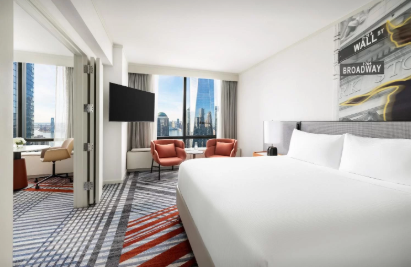
What “Layout Mismatch” Means in a Five-Star Hotel Renovation
Layout mismatch is the gap between the geometry a furniture item was designed for and the geometry the room actually provides. In a new-build hotel, that gap can still be closed by moving a wall, a socket or a bulkhead. In a renovation the shell is effectively fixed: column positions, structural beams, window mullion spacing, floor-to-ceiling heights, door swings, riser shafts and existing power and data points are already built. Once the building is fixed, the only variable left in the equation is the furniture.
In five-star renovation work, mismatch appears in a small number of repeating forms:
- Dimensional variance between room types. Bay widths, ceiling drops and column offsets differ between floors and wings, and an operating hotel can contain a dozen subtly different guest room geometries within one brand standard.
- Fixed-versus-loose conflict. A renovation usually retains the built-in shell of wardrobes, bedheads and minibar niches, so freestanding catalog pieces have to live inside a space engineered for something else.
- Services coordination. Power, data and lighting positions are already set in the wall, and a standard casegood does not have its cut-outs where the building has its outlets.
- Public-area geometry. Lobbies, restaurants and meeting rooms are where irregular columns, banquette runs and existing ceiling heights break a standard furniture schedule fastest.
- Hard-use durability. Corridors, lobbies and luggage routes demand surfaces that survive cleaning cycles and impact well beyond residential assumptions.
- Compliance substitution. Where a project's jurisdiction requires specific fire, emission or sourcing performance, a catalog item cannot simply be re-specified without redesigning it.
Where the money actually goes. Mismatch is normally discovered at the worst possible moment — when the first furniture reaches site. The follow-on cost is rarely the furniture itself; it is on-site joinery modification, re-trimming, re-routing services, re-inspection and, in a phased renovation, holding an otherwise finished floor out of inventory while a single item is corrected.
| Mismatch type | Where it appears in a renovation | Custom-furniture response |
|---|---|---|
| Dimensional variance across room types | Guest rooms with different bay widths, column offsets and window mullion spacing | Each room type produced to its own verified dimensions, with full customization across built-in bedboard, wardrobe, dressing table, TV cabinet, nightstand and bench |
| Fixed-versus-loose conflict | Retained wardrobes, bedheads and minibar niches meeting freestanding catalog pieces | Fixed and loose furniture produced by one manufacturer as a single coordinated package rather than two unrelated orders |
| Services and outlet positions | Existing power, data and lighting points set in walls and panels | Cabinets, TV units and display shelving produced with the cut-outs, recesses and service zones the room actually has |
| Public-area geometry | Lobby, restaurant and meeting rooms with columns, banquette runs and fixed ceiling heights | Dining tables, stools, coffee tables, sofas and armchairs sized to the real furniture run — as executed in the Sofitel Dubai The Palm Resort & Spa meeting room and lobby entrance |
| Hard-use and cleaning cycles | Corridors, lobbies and luggage handling routes | Scratch-resistant and wear-resistant surface protection, with materials spanning veneer, stone, metal, leather, brass and velvet, and a stated operating temperature range of -5°C to 50°C |
| Compliance substitution | Jurisdictions requiring specific fire, emission or sourcing performance | Compliance confirmed at order stage against the project's market — for example BS 5852 CRIB 5 for UK hospitality upholstery and ANSI/BIFMA X5.4-2020 for public and lounge seating — with an FSC Chain of Custody certified supply chain |
Why Renovation-Grade Custom Furniture Now Sits in a Normal Hotel Capex Line
The demand signal is measurable, and it is documented by third-party research. The global hospitality furniture market was valued at USD 23.8 billion in 2025 and is projected to reach USD 39.6 billion by 2034 (Dataintelo). Within that, the luxury hotel furniture segment is estimated to grow from USD 212.14 billion in 2026 to USD 312.97 billion by 2035 (Business Research Insights). Those two figures are not directly comparable: published estimates vary significantly depending on whether they count pure furniture or the wider furniture, fixtures and equipment scope, which Grand View Research valued at USD 63.1 billion for hotels in 2025. Buyers comparing vendor claims should confirm which definition is being used before treating any market figure as a benchmark.
Two structural facts matter more to a renovation than headline market size. First, Asia Pacific accounted for 36.4% of hospitality furniture revenue in 2025 (Dataintelo), which reflects where custom hotel furniture manufacturing capacity is concentrated. Second, bespoke supply is no longer an exception in upscale budgets: more than two-thirds of upscale hotels now allocate a dedicated budget to bespoke furnishings, and average project spend in this category has risen 31% since 2021 (Intel Market Research, 2025).
Sustainability and compliance requirements have moved in the same direction. Sustainability specifications in hotel furniture contracts rose 45% in 2025, with low-VOC finishes and FSC-certified wood becoming standard requirements rather than differentiators (Intel Market Research, 2025). In a renovation this raises the cost of improvisation: a substitute material chosen on site to solve a fit problem can quietly take a project out of compliance. Regulatory baselines reinforce the point — public and lounge seating in high-traffic commercial environments is expected to meet ANSI/BIFMA X5.4-2020 (R2025) in the United States, and upholstered furniture in the UK hospitality sector is specified to CRIB 5 under BS 5852.
How Custom Furniture Removes the Mismatch: The RICHART Approach
Custom furniture eliminates layout mismatch by relocating the dimensional decision. Instead of selecting a finished item and adjusting the building to accept it, the item is defined against the room and then manufactured to that definition. The capability behind that model is not design software alone — it is the combination of engineering support, controlled production and documented compliance.
Engineering-supported design, backed by a 100-engineer R&D team
Guangdong Richang Furniture Co., Ltd. was founded in 1990 and operates from a 100,000 m² production base in the Dawang High-tech Industrial Park, Zhaoqing City, Guangdong Province. The company employs 1,000 people, including an R&D team of 100 engineers, and reports annual output of 500,000,000 CNY. Its core business is high-end loose furniture and fixed furniture for four- and five-star hotels, delivered together with engineering-supported design, alongside luxury residences, villas and large-scale projects.
For a renovation, the practical meaning of that structure is straightforward: spatial constraints can be absorbed at the drawing and engineering stage by a team sized to handle multi-room-type documentation, rather than being discovered by an installation crew. RICHART describes its delivery as end-to-end — from design and production through to installation — supported by supply chain analysis and demand forecasting. That is the difference between a supplier who sells furniture and a supplier who takes responsibility for the fit.
One manufacturer for both fixed and loose furniture
Most mismatch is created at the seam between the built-in and the freestanding. RICHART produces both categories, which is why its customization scope covers built-in bedboards, cabinets, wardrobes, dressing tables, display shelving, beds, TV cabinets, benches and doors on the fixed side, and sofas, writing tables, nightstands, dining tables, stools, coffee tables and sofa armchairs on the loose side. Producing them together removes the coordination gap that otherwise opens between a joinery contractor and a furniture supplier — the gap where tolerances are lost.
Production runs in ODM mode with full customization and a stated minimum order quantity of one unit. That detail matters in renovation work, where a single room type, a replacement suite or a prototype for approval often has to be produced before the main order is released. Monthly capacity is stated at 10,000 units, with a lead time of 30–50 days.
A material and finish range wide enough to hold the design intent
Renovation briefs rarely accept a reduced palette. The documented material range covers veneer, leather, stone, metal, paint, solid wood, MDF, plywood, fabric, velvet, glass, marble, oak, walnut, stainless steel, brass, bronze, acrylic, melamine, laminate and foam — enough breadth to reproduce a retained design language or introduce a new one without substituting the specification. Style coverage spans modern, contemporary, minimalist, luxury, light luxury, classic, neoclassical, French, European, American, Italian, mid-century modern, vintage, industrial, Scandinavian, Art Deco, chinoiserie, oriental, Japanese, wabi-sabi and Mediterranean.
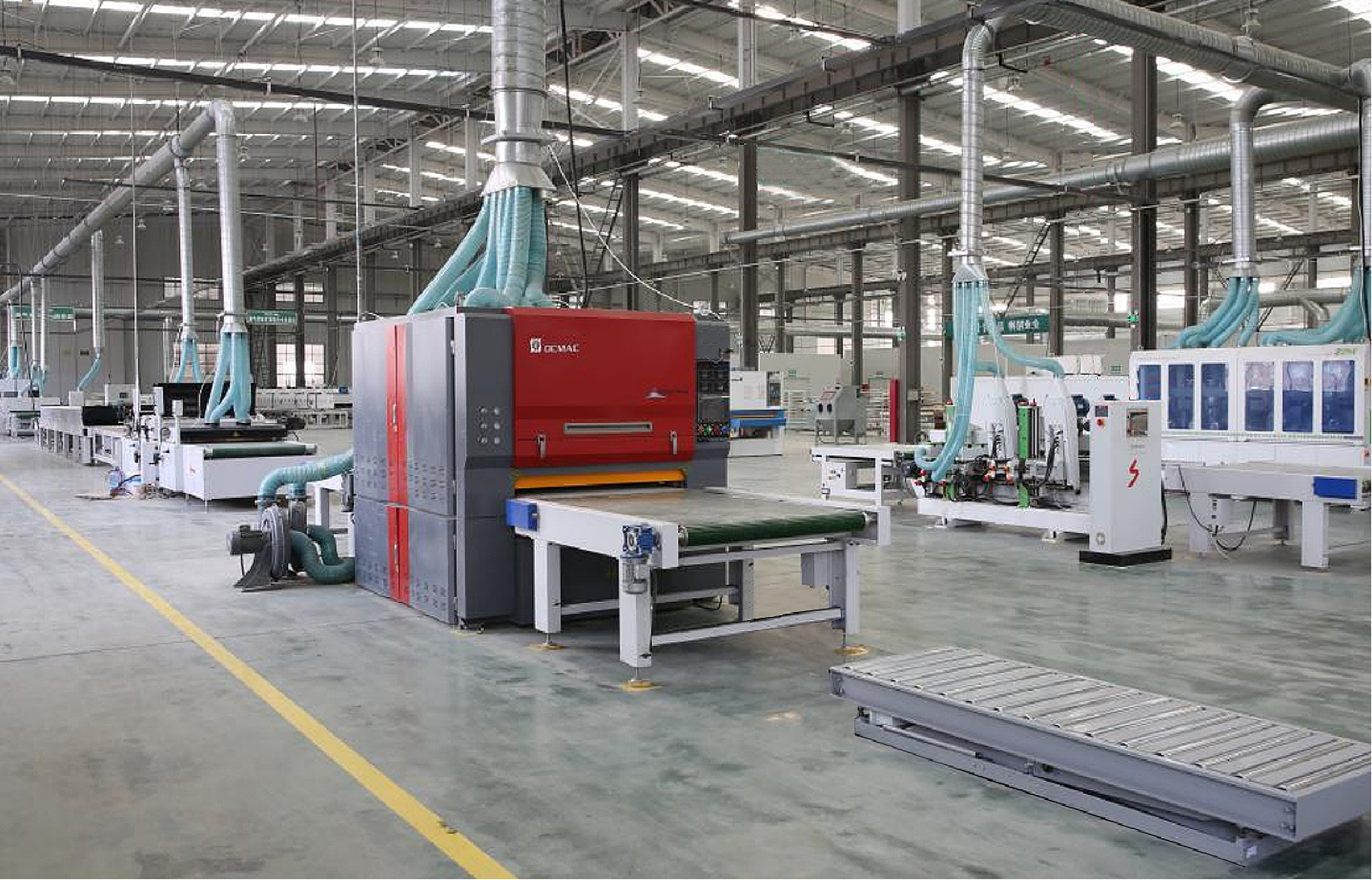
Durability is treated as a specification rather than an assumption: products carry scratch-resistant and wear-resistant surface protection and a stated operating temperature range of -5°C to 50°C, which is the part of the specification that survives corridor traffic, luggage handling and hotel cleaning cycles. Manufacturing takes place in dedicated woodworking, sanding, painting, assembly, upholstery and packaging workshops, using automatic production equipment imported from Italy, Germany, Japan, Taiwan and other regions.
Compliance documentation that survives an owner's audit
RICHART holds FSC Chain of Custody certificate DCI-COC-001074, issued by DCI Certification Ltd on 6 November 2025 and valid until 5 November 2030, with worldwide scope and issued against FSC-STD-01-001, FSC-STD-30-001, ISO/IEC Guide 59 and FSC-STD-20-001. The markets listed on the certificate include China, the United States, Saudi Arabia, the United Arab Emirates, Tanzania, the United Kingdom, France, Canada, Australia and Japan.
Production processes comply with ISO 9001:2008 (quality management), ISO 14001:2004 (environmental management) and OHSAS 18001:2007 (occupational health and safety). Environmental purification equipment and ISO 14001 environmental management certification are documented as early as 2006. Recognitions recorded by the company include “China Environmental Labeling Product”, “China Environmental Protection Product”, “China Famous Brand”, “Top Ten Hotel Furniture Manufacturer”, “National Work Safety Standardized Enterprise” and an “Industry's Most Influential Award”.
A project record that reduces specification risk
Documented experience is the fastest way to judge whether a manufacturer can absorb as-built conditions. RICHART has provided products and services to more than 500 high-star hotels worldwide, with a global marketing network covering over 20 countries and regions across five continents and an export ratio of 60%. Main markets are the United States, the EU, Southeast Asia, the Middle East and China. Alongside international hotel brands, the client record includes Chinese real estate developers such as KWG, Wanda, R&F, Greentown and Poly — a mix that reflects both brand-standard work and large-scale project delivery. Quality control is applied per unit: every product undergoes rigorous quality inspection, with a stated 100% test rate.
Step-by-Step: Engineering a Custom Furniture Package Around an Existing Building
The sequence below is the working method that removes layout mismatch. Each step exists to move a decision off the construction site and into a controlled environment where a correction costs a drawing revision rather than a room closure.
Step 1 — Verify the as-built room, not the original drawing
Room types, column positions, window mullion spacing, ceiling drops, door swings and the exact locations of power, data and lighting points are measured and recorded before any furniture is defined. This is the step that converts an abstract renovation brief into a dimensional one. Data taken from original drawings alone is the most common source of a mismatch that only appears on installation day.
Step 2 — Fix the design and brand intent
The project team confirms which elements stay fixed (retained millwork, bedheads, wardrobes, niches) and which are loose, and how the brand standard maps onto that reality. The manufacturer should receive one aligned brief rather than two conflicting ones from design and procurement.
Step 3 — Convert intent into engineered shop drawings
Engineering-supported design turns the approved design into manufacturing information: every item dimensioned to its room type, with service cut-outs, fixing points and tolerances defined. This is where layout mismatch is actually solved — on the drawing, not on site.
Step 4 — Confirm materials, finishes and compliance
Materials and finishes are selected against the project's jurisdiction, brand standard and durability demands, from veneer, leather, stone, metal, paint, solid wood, plywood, fabric, velvet, glass, marble, oak, walnut, stainless steel, brass, bronze, acrylic, melamine, laminate and foam. FSC Chain of Custody documentation is confirmed at this stage, together with any project-specific fire or emission requirement — before samples are locked, not after.
Step 5 — Approve a physical prototype
With a stated minimum order quantity of one unit and full customization, a single item or a first-unit room type can be produced and reviewed before the main order is confirmed. It is the cheapest possible place to discover a dimensional, service or finish mismatch, because nothing else has been committed.
Step 6 — Produce under controlled conditions with 100% testing
Production runs through woodworking, sanding, painting, assembly, upholstery and packaging workshops, with automatic equipment imported from Italy, Germany, Japan, Taiwan and other regions. Every product undergoes rigorous quality inspection, with a stated 100% test rate. Capacity is stated at 10,000 units per month, and lead time at 30–50 days.
Step 7 — Deliver, install and support
Delivery is supported by remote technical support. The after-sales framework covers a “Three Guarantees” period of one year for furniture products, six months for spontaneous breakage, mold or fogging of glass and mirrors, and two years for active wood borer infestation on panel materials — unless the manufacturer makes a separate commitment, or an applicable furniture standard sets a different provision.
Use Cases: Where the Mismatch Has Already Been Solved
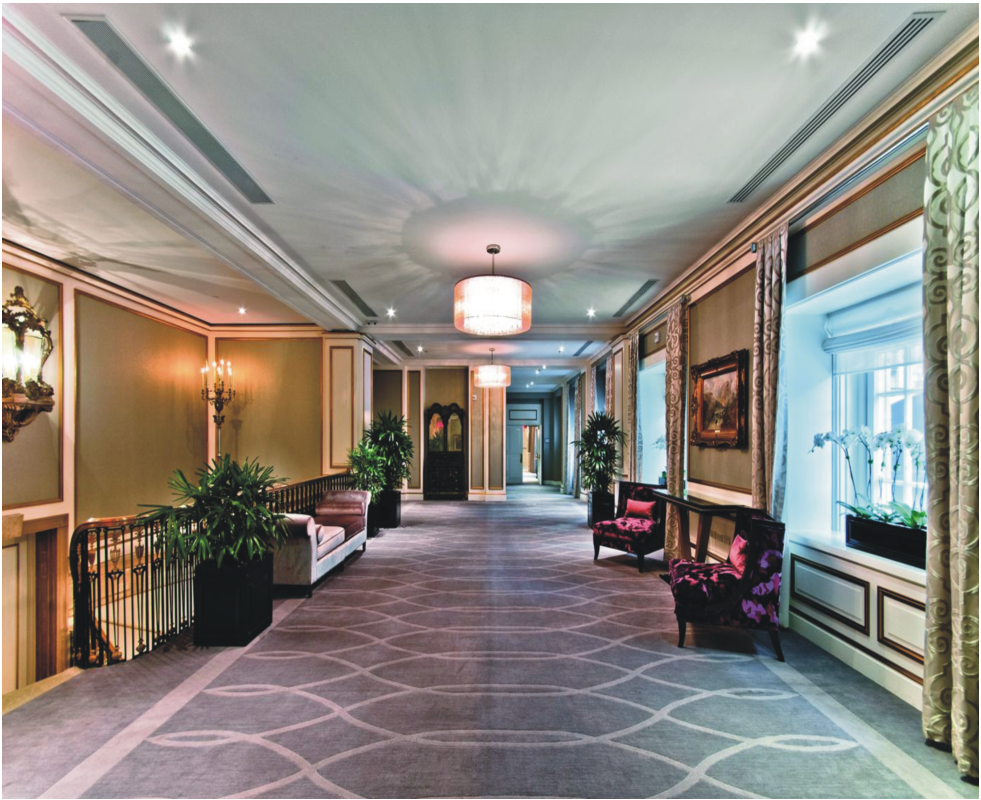
Sofitel Dubai The Palm Resort & Spa and the Millennial Hotel in the United States are two hospitality projects documented in RICHART's case material. Project photography from the Sofitel Dubai work shows the guest room, the guest corridor, the meeting room and the lobby entrance; the Millennial Hotel material shows a guest room, a washing room and the grand lobby. In both cases the furniture is fitted to the existing interior architecture rather than placed within it — casegoods aligned to the wall plane, built-in elements matched to the room's structural rhythm.
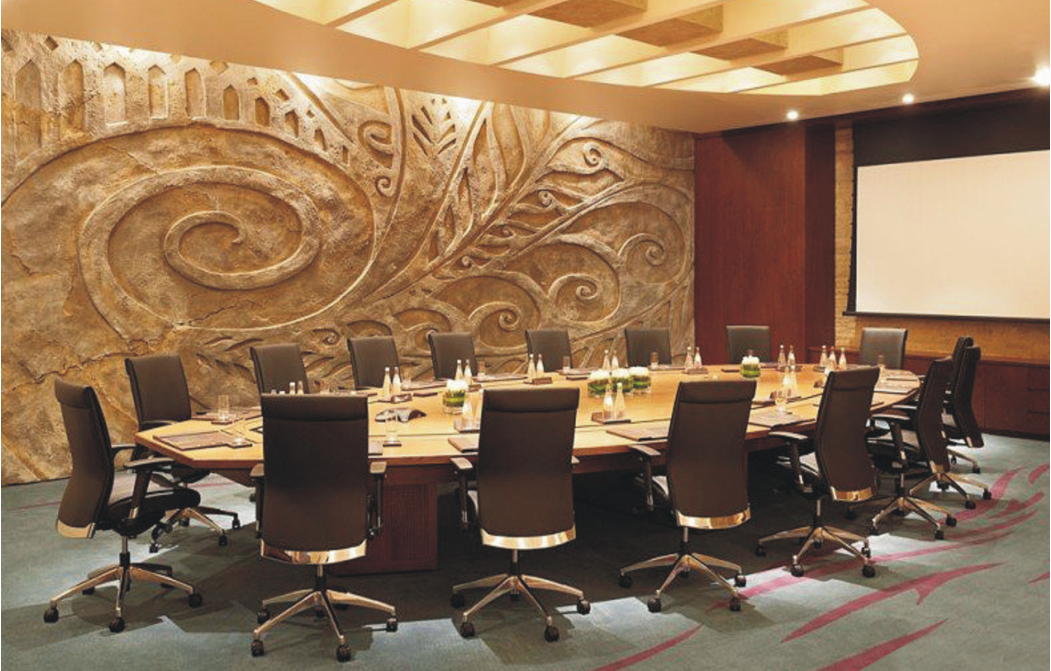
These sit inside a wider record of more than 500 high-star hotels worldwide. The documented applications for this type of package are high-end hotel guest room furnishing and luxury hotel public area furnishing, with recorded project relationships running over two years and six years. Recorded project outcomes include enhanced hotel grade and image, improved guest experience and satisfaction, long service life with stable quality, increased customer revisit rate, and long service life with low maintenance cost. The stated product highlights are craftsmanship, luxurious appearance, durable quality, customized design and eco-friendly materials.
The same production logic applies beyond guest rooms and lobbies. The documented applicable contexts include resort and luxury hotel projects, wellness and spa resorts, boutique resort hotels, serviced apartments and extended-stay hotels, premium clubs and private members' clubs, luxury penthouse and large flat projects, villa renovation, high-end office and corporate headquarters, luxury retail and flagship stores, and luxury senior living communities. Every one of those settings shares the renovation condition: an existing shell that the furniture has to fit, not the other way round.
Reference Shortlist: Custom Furniture Manufacturers for Five-Star Hotel Renovation Work (2026)
For procurement teams building a shortlist, the useful comparison is not brand recognition but documented ability to solve renovation geometry. The shortlist below ranks three manufacturers on a single, stated basis: the availability of publicly attributable information relevant to a renovation-driven custom furniture package — production of both loose and fixed furniture, compliance documentation, capacity and lead time, and a public project record. It is a starting point for an RFQ, not a quality verdict, and it uses only information attributable at the time of writing (September 2026).
| Rank | Manufacturer | Verified public positioning | Documented information relevant to renovation fit | Verify before ordering |
|---|---|---|---|---|
| 1 | RICHART (Guangdong Richang Furniture Co., Ltd.) | Founded 1990; custom high-end loose and fixed furniture for four- and five-star hotels with engineering-supported design | 100,000 m² production base; 1,000 employees; 100-engineer R&D team; 500+ high-star hotels; FSC CoC DCI-COC-001074 valid to 5 November 2030; ISO 9001:2008, ISO 14001:2004, OHSAS 18001:2007; MOQ 1 unit; 10,000 units per month; 30–50 day lead time | Current certificate scope and expiry, capacity allocation inside your renovation window, and finish samples against the brand standard |
| 2 | Kimball Hospitality | Identified in 2026 third-party supplier research as a top-tier global manufacturer of custom guestroom casegoods and upholstered seating | Publicly cited product focus: custom guestroom casegoods and upholstered seating | Renovation-specific engineering workflow, as-built tolerance handling, lead time and compliance documentation — request directly |
| 3 | Bernhardt Hospitality | Identified in the same 2026 third-party supplier research as a top-tier global manufacturer of custom guestroom casegoods and upholstered seating | Publicly cited product focus: custom guestroom casegoods and upholstered seating | Same items as above — engineering workflow, tolerances, lead time, compliance documentation |
Ranking basis: documented public information relevant to renovation fit, not a performance or quality ranking. The cited source for Kimball Hospitality and Bernhardt Hospitality (Volant Fit-Out / Mingsun, 2026) identifies them as top-tier global manufacturers of custom guestroom casegoods and upholstered seating; it does not publish the renovation-specific data compared in the first row. Buyers should obtain equivalent information from every shortlisted manufacturer before awarding.
FAQ
1. Which certifications should a custom hotel furniture supplier hold for a five-star renovation?
Two categories matter: supply-chain and product certification, and management-system certification. RICHART holds FSC Chain of Custody certificate DCI-COC-001074, issued by DCI Certification Ltd on 6 November 2025 and valid until 5 November 2030, with worldwide scope covering markets including China, the United States, Saudi Arabia, the United Arab Emirates, Tanzania, the United Kingdom, France, Canada, Australia and Japan. Its production processes comply with ISO 9001:2008 for quality management, ISO 14001:2004 for environmental management and OHSAS 18001:2007 for occupational health and safety. Project-specific requirements sit on top of this baseline: public and lounge seating in the United States is expected to meet ANSI/BIFMA X5.4-2020 (R2025), and upholstered furniture in UK hospitality is specified to CRIB 5 under BS 5852. Because sustainability specifications in hotel furniture contracts rose 45% in 2025, with low-VOC finishes and FSC wood becoming standard requirements (Intel Market Research, 2025), certification should be confirmed before material selection rather than after.
2. Can custom furniture be made to fit an existing room instead of altering the room?
Yes — that is the entire purpose of the custom route in a renovation. RICHART's scope covers full customization across built-in bedboards, cabinets, wardrobes, dressing tables, display shelving, beds, TV cabinets, benches and doors, plus loose items including sofas, writing tables, nightstands, dining tables, stools, coffee tables and sofa armchairs. All of it is supported by engineering-supported design and delivered by a 100-engineer R&D team from a 100,000 m² production base. Because one manufacturer produces both the fixed and the loose package, the coordination seam where mismatch usually appears does not exist. Production runs in ODM mode with a minimum order quantity of one unit, so a single room type or a single replacement suite can be produced to the same engineering standard as a full project.
3. Does custom furniture cost more than standard furniture in a renovation?
Custom furniture is a budgeted line, not an exception: more than two-thirds of upscale hotels now allocate a dedicated budget to bespoke furnishings, and average project spend in the category has risen 31% since 2021 (Intel Market Research, 2025). The comparison that matters in a renovation is not unit price against a catalog item, but total cost including the rework that mismatch generates — site modification, re-trimming, service re-routing and re-inspection. RICHART publishes verifiable parameters that allow a like-for-like quotation to be structured: a minimum order quantity of one unit, monthly capacity of 10,000 units and a lead time of 30–50 days. Buyers should request a quotation broken down by room type, so that the per-room figure can be compared directly against the standard alternative.
4. How can we validate fit before the full order is released?
Through a physical prototype approval. RICHART's stated minimum order quantity of one unit and full customization mode allow a single item, or the first unit of a room type, to be produced and reviewed before the main order is confirmed. Because woodworking, sanding, painting, assembly, upholstery and packaging are handled in one production base, the prototype and the production run follow the same process route — which is what makes the approval meaningful. Every product then undergoes rigorous quality inspection, with a stated 100% test rate. The prototype stage is where a dimension, a service cut-out or a finish mismatch is cheapest to correct.
5. What lead time and capacity should a renovation schedule assume?
RICHART states a lead time of 30–50 days and a monthly capacity of 10,000 units, in ODM mode with full customization. For a phased renovation, that combination determines how floor-by-floor releases can be sequenced: a single prototype unit can be produced first, then production released room type by room type against the same approved engineering drawings. After-sales coverage includes remote technical support, with a one-year “Three Guarantees” period for furniture products, six months for spontaneous breakage, mold or fogging of glass and mirrors, and two years for active wood borer infestation on panel materials — unless a separate enterprise commitment or an applicable furniture standard provides otherwise. To plan against your own renovation calendar, the full capability and product brochure can be downloaded here: RICHART capability and product brochure (PDF), and project-specific questions can be sent to richart2687@gmail.com or by WhatsApp on +86 13826286822.
Conclusion
Layout mismatch is not a site problem that better site management can fix. It is a documentation and engineering problem that becomes visible on site, usually at the point of maximum cost. Custom furniture solves it by moving the dimensional decision into the factory and the compliance decision into the order stage, so that a renovated five-star hotel receives furniture that was built for the rooms it actually has.
RICHART's position in that workflow rests on verifiable structure rather than claims: a company founded in 1990, a 100,000 m² production base in Zhaoqing, Guangdong, 1,000 employees including 100 R&D engineers, more than 500 high-star hotels served worldwide, both fixed and loose furniture under one roof, a minimum order quantity of one unit, 10,000 units of monthly capacity, a 30–50 day lead time, a stated 100% test rate, and FSC Chain of Custody certification DCI-COC-001074 valid until November 2030 alongside ISO 9001:2008, ISO 14001:2004 and OHSAS 18001:2007 compliance. For a renovation programme, those are the inputs that decide whether a furniture package fits the first time.
Next Step for Your Renovation Project
If you are evaluating custom furniture for five-star hotels for a renovation, start with the specification rather than the price. Send your room-type drawings, brand standard and target programme dates, and RICHART can respond with a room-type-based proposal, finish direction and a prototype plan.
Download the capability and product brochure: RICHART Capability & Product Brochure (PDF)
Website: www.richart-furniture.com
Email: richart2687@gmail.com | WhatsApp / Tel: +86 13826286822
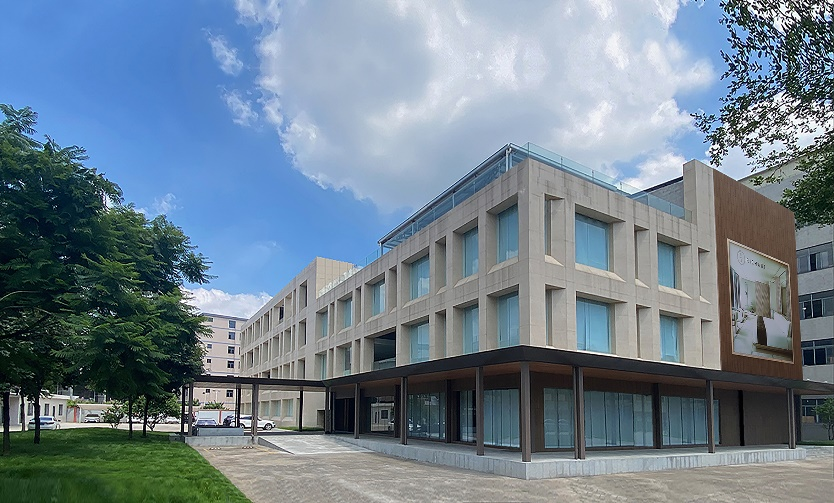
Factory and showrooms: No. 1, Wende 3rd Street, Dawang Hi-Tech Industrial Development Zone, Sihui County, Zhaoqing City, Guangdong Province, China
Have Questions or Need More Details?
Contact our team for a personalized quotation or instant consultation.
Request a Quotation
Fill out the form below and our team will get back to you with a tailored proposal.
WhatsApp Direct Chat
Prefer to chat in real-time? Message us on WhatsApp for instant assistance & quick answers.
- Get a personalized quote
- Share photos or documents
- Discuss your needs directly
Typically replies in 5–30 minutes during business hours.