
Ranked: Most Requested Custom Furniture Pieces for Luxury Villas and Mansions
Six custom furniture categories dominate villa and mansion specifications: seating systems, bedroom suites, dining tables and dining seating, fixed cabinetry, statement pieces, and custom doors. They are ranked below in the order that experienced specifiers tend to prioritise them, because that order determines how a fixed budget should be sequenced rather than spread evenly.
Custom furniture for luxury villas and mansions is rarely a single purchase. It is a sequence of decisions across living rooms, dining rooms, bedrooms, corridors, and private entertainment zones — and the order in which those decisions are made shapes both the finished grade of the residence and the total cost of the package.
This article ranks the pieces most often requested for luxury villas and private mansions. The order is an editorial prioritisation based on how these categories appear in hotel-grade and high-end residential specification scopes, ordered by visual weight, structural complexity, and the amount of specification work each category requires. It is not a statistical survey. The benchmark applied throughout is five-star hotel-grade custom furniture — the standard that RICHART, the export brand of Guangdong Richang Furniture Co., Ltd., has applied to more than 500 high-star hotel projects worldwide since the company was founded in 1990.
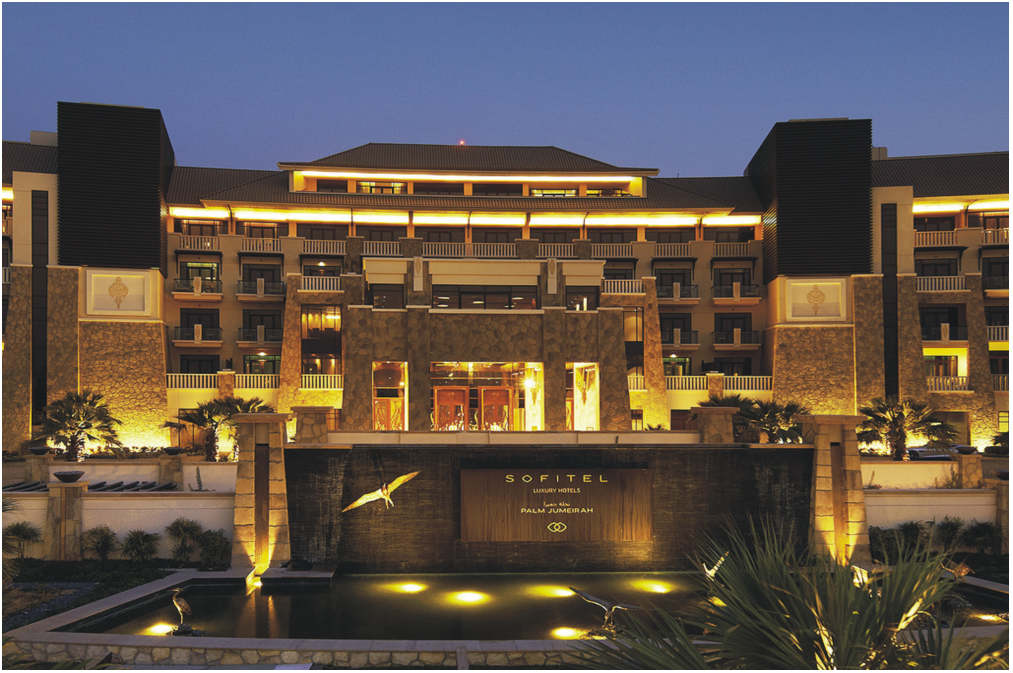
Lobby entrance of the Sofitel Dubai The Palm Resort And Spa project — a hotel-grade custom furniture benchmark that villa and mansion projects are frequently measured against.
Problem Definition: Why Villa Furniture Budgets Get Spread Too Thin
The core problem in a villa furniture package is not a shortage of options. It is the absence of a priority order.
A luxury villa brief normally arrives as an architectural drawing set, a mood board, and a budget. It rarely arrives with a ranked list of furniture categories. When the procurement or design team begins working through the drawing set room by room, every space looks equally urgent: the living room, the formal dining room, the master suite, the guest suites, the study, the corridor, and the private lounge all require furniture at the same time.
RICHART's custom scope for hotel and luxury residential projects covers built-in bedboards, cabinets, wardrobes, dressing tables, display shelves, beds, sofas, writing tables, nightstands, dining tables, stools, coffee tables, sofa armchairs, TV cabinets, benches, and doors. That is sixteen product categories inside a single villa. Released simultaneously to a manufacturer without a priority structure, three problems follow almost every time.
- Budget dilution. A fixed furniture budget divided across sixteen categories produces sixteen average spaces instead of four or five exceptional ones.
- Material inconsistency. When veneer, marble, brass, leather, velvet, and solid wood are confirmed in different weeks by different people, the finished interior loses tonal coherence.
- Schedule collision. Sample approvals, surface finish confirmations, and installation sequencing compete for the same production window.
The practical fix is a ranked specification order: decide which categories carry the most visual weight, lock those first, and treat the remaining categories as supporting scope. The ranking below is built for exactly that purpose.
Industry Background: The Market Context Behind Villa Specification
The demand backdrop supports a ranked approach rather than a broad one. According to Grand View Research, the global luxury furniture market was valued at USD 31.1 billion in 2024 and is expected to grow at a CAGR of 4.2% from 2025 to 2030.
Regional concentration matters for material and style direction. Fortune Business Insights reports that Europe dominated the luxury furniture market with a share of approximately 37.31% in 2025. Italy remains a major supply source: the Italian Trade Agency reports that Italian furniture exports reached USD 14.4 billion in 2024, which is one reason Italian style references appear so often in villa specifications.
Material direction is also measurable. Grand View Research reports that wood accounted for a 24.5% revenue share of the luxury furniture market in 2024, a figure that reflects the durability and visual warmth expected in villa interiors. One industry estimate places custom-made furniture at approximately 33% of premium furniture orders globally, driven by demand for personalisation among high-net-worth buyers; that estimate comes from the Luxury High End Furniture Market Report and should be read as a directional industry figure rather than a fixed statistic.
Compliance expectations are converging across export markets. ISO 9001:2015 for quality management and ISO 14001:2015 for environmental management are commonly referenced by luxury furniture manufacturers. Residential furniture in the United States must comply with UL 962 standards for safety covering household and commercial furnishings. Furniture supplied into the European market is subject to general product safety regulations (GPSR) and standards such as EN 438 for high-pressure decorative laminates.
For villa and mansion projects, these figures and standards mean one thing in practice: the categories that carry the most visual weight should also carry the strongest compliance documentation, because they are the pieces that buyers, designers, and inspectors examine most closely.
The Ranking: Six Custom Furniture Categories in Priority Order
Each entry below explains why the category ranks where it does, what a five-star hotel-grade specification typically includes, and which decision should be locked first.
1 Custom Seating Systems — Sofas, Armchairs, Benches, and Stools
Seating ranks first because it occupies the largest visible surface area in a villa and receives the most physical wear. A living room, a private lounge, a library, a bedroom seating group, and a corridor bench can together account for more square metres of visible furniture than any other category.
Why it ranks first. Seating is the category where softness, tailoring, and finish quality are judged at close range. A villa guest sits on the sofa before they inspect the cabinetry. Misfitting upholstery or a sagging seat presents a visible quality problem in a way that a poorly aligned shelf rarely does.
Hotel-grade specification. Hotel-grade seating uses engineered internal structure, controlled cushioning, and surface protection rather than decorative padding alone. RICHART's material scope for this category includes solid wood, MDF, plywood, foam, fabric, velvet, and leather, with metal detailing in stainless steel, brass, or bronze, and surface protection specified as scratch-resistant and wear-resistant. Operating temperature is rated at −5°C to 50°C, which is relevant for villas in desert, mountain, or coastal climates where humidity and temperature swing widely.
What to decide first. Confirm the seating footprint per room and the upholstery family (fabric, velvet, or leather) before confirming decorative details. Upholstery drives both cost and lead time more than any other seating variable.
2 Bedroom Suites and Built-In Bed Walls
Bedroom furniture ranks second because it is where loose furniture and fixed furniture merge. A master suite in a luxury villa or private mansion typically combines a bed and nightstands with a built-in bedboard, wardrobes, a dressing table, and storage that must align with the architecture.
Why it ranks second. Bedroom scope is the most frequent source of coordination failure between interior design and site conditions. Built-in bedboards, wardrobes, and dressing tables are dimension-bound: they must match wall lengths, ceiling heights, and electrical positions. This is fixed furniture work as much as furniture supply, and it requires a manufacturer that produces both loose and fixed furniture within the same quality system.
Hotel-grade specification. Materials in this category typically include solid wood, oak, walnut, veneer, leather, fabric, and metal hardware. Hospital-grade durability expectations do not apply here, but hotel-grade wear expectations do: drawers, hinges, and sliding mechanisms are specified for repeated daily use over years, not occasional use. Every RICHART unit passes 100% testing before dispatch.
What to decide first. Lock the built-in dimensions and the wardrobe interior configuration before selecting decorative finishes. Drawings must be approved before production, because fixed furniture cannot be adjusted on site without visible compromise.
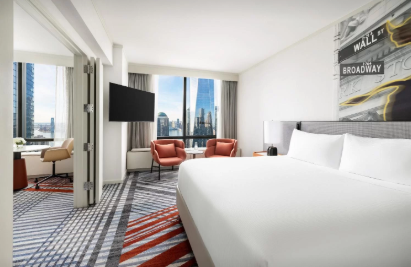
A guest room in the Millennial Hotel, USA — an example of bedroom scope where loose and fixed furniture are delivered as one coordinated package.
3 Dining Tables and Coordinated Dining Seating
Dining ranks third because it is the category most often used for entertaining, and therefore the one that guests remember. In a mansion or villa, the formal dining room, the breakfast area, and the outdoor entertaining zone may each require a separate table specification.
Why it ranks third. A dining table is a single large object with a single large surface. Any inconsistency in marble veining, veneer matching, or edge detailing is visible immediately. It is also the category where material substitutions become most obvious, which is why buyers tend to standardise on stone and solid wood.
Hotel-grade specification. RICHART's dining scope covers dining tables and coordinated seating such as stools, with material options including marble, stone, solid wood, oak, walnut, veneer, stainless steel, brass, and bronze. Restaurant and banquet experience is directly transferable here: hotel dining tables are specified for repeated service cycles, edge impact, and surface cleaning, which is a stricter brief than residential use.
What to decide first. Confirm the table dimension, the seat count, and the tabletop material in one decision. Changing the tabletop material after the base is engineered is the most expensive late change in a dining package.
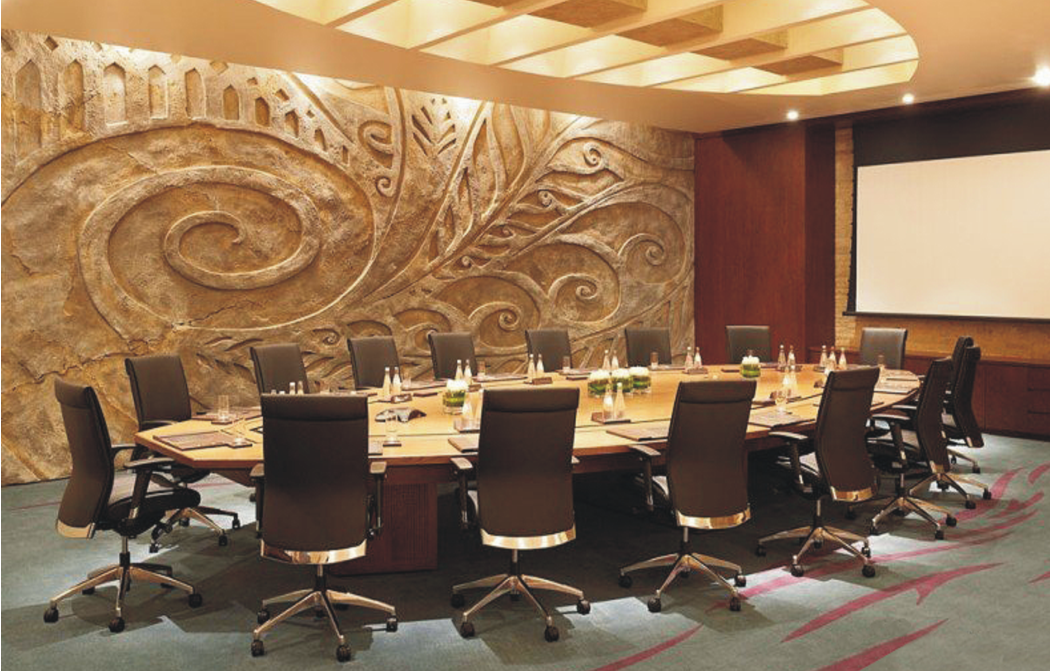
Meeting room of the Sofitel Dubai The Palm Resort And Spa project — the same long-table engineering logic applies to villa dining and entertaining spaces.
4 Fixed Cabinetry and Integrated Storage
Cabinetry ranks fourth because it is largely invisible in photographs but highly visible in daily use. TV cabinets, display shelves, wardrobes, and general storage define how a villa functions across years, not how it looks on a handover day.
Why it ranks fourth. Storage is a quantity problem as much as a design problem. A private mansion typically requires more storage volume than a hotel suite, distributed across more rooms. Cabinetry is also the category where factory capacity and panel-processing precision matter most, because small dimensional errors multiply across dozens of units.
Hotel-grade specification. The material set for cabinetry includes MDF, plywood, veneer, paint, laminate, melamine, acrylic, glass, and metal trim, with surface protection specified as scratch-resistant and wear-resistant. RICHART's production base is a 100,000 m² facility in the Dawang High-tech Industrial Park in Zhaoqing City, Guangdong Province, equipped with woodworking, sanding, painting, assembly, upholstery, and packaging workshops.
What to decide first. Confirm the storage schedule and the interior configuration logic before finishes. Finish changes are cosmetic; interior configuration changes are structural.
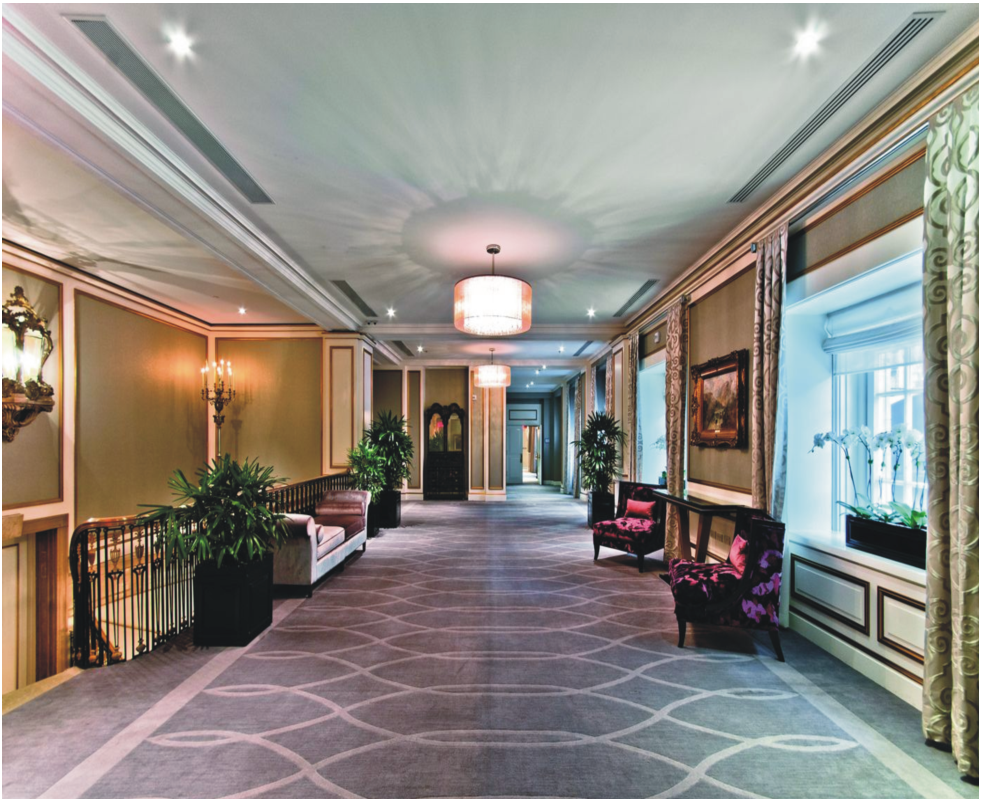
Guest corridor of the Sofitel Dubai The Palm Resort And Spa project — integrated fixed furniture and millwork alignment, applied in villa corridors and private wings.
5 Statement and Accent Pieces
Statement pieces rank fifth because they are the last category to be added and the first to be noticed. Coffee tables, benches, display shelves, and accent seating perform a compositional role: they close the gap between a furnished room and a finished room.
Why it ranks fifth. These pieces carry disproportionate visual weight for their cost. A marble-and-brass coffee table or a sculpted bench can shift the perceived grade of an entire living room. They also carry the highest risk of visual conflict, because they are selected after the major categories are already fixed.
Hotel-grade specification. Material direction here leans towards marble, stone, glass, brass, bronze, stainless steel, and solid wood, often combined in a single piece. Hotel lobbies and public areas are the usual source of reference language for these combinations, and they tolerate far more daily contact than a residential piece.
What to decide first. Confirm the metal finish family (brass, bronze, or stainless steel) across all statement pieces at once. Mixed metal finishes chosen room by room are the most common visual inconsistency in luxury villas.
6 Custom Doors and Architectural Millwork
Doors and architectural millwork rank sixth because they are structural rather than decorative, yet they unify every other category. A custom door programme ties room-to-room transitions into the same material and finish language as the cabinetry and the built-in furniture.
Why it ranks sixth. Doors are rarely the reason a client commissions custom furniture, but they are frequently the reason a finished villa feels inconsistent. When doors come from a separate supplier, hardware, finish, and edge detailing diverge from the furniture package.
Hotel-grade specification. Door scope sits inside the same customisation list as the rest of the furniture package, using solid wood, veneer, paint, metal, glass, or acrylic finishes in line with the room scheme. Because doors are installed late in a project, they are also a useful indicator of whether a manufacturer can hold a finish standard across a long production window.
What to decide first. Confirm whether doors are inside or outside the furniture package. If they are inside, finish matching is straightforward; if they are outside, the schedule must include a formal finish-matching step.
Step-by-Step Breakdown: How to Sequence a Villa Furniture Package
A ranked list only creates value if it is converted into a sequence. The following six steps translate the ranking above into a working procurement process for a villa or mansion project.
- Build a space-by-space scope list. Map every room to the sixteen custom categories that apply to it. A master suite might carry a bed, nightstands, a built-in bedboard, a wardrobe, and a dressing table; a formal dining room might carry only a dining table and coordinated seating.
- Rank categories against the fixed budget. Apply the priority order: seating and bedroom suites first, dining third, cabinetry fourth, statement pieces and doors after. If the budget does not cover everything, this is where the decision is made — not at the sample stage.
- Lock materials and finishes by category. Confirm the upholstery family, the wood species, the stone direction, and the metal finish as category-level decisions rather than room-level decisions. Consistent material families are what make a large villa read as one interior.
- Validate with a sample or prototype. Sample approval is the point at which finish, proportion, and comfort can still be adjusted. RICHART's minimum order quantity is one unit, which allows a single villa, a single room, or a single prototype order without a volume commitment.
- Confirm production scheduling early. Standard lead time is 30–50 days, with monthly capacity of 10,000 units. For a villa with multiple categories, the schedule should separate fixed furniture from loose furniture, because fixed items must be delivered and installed in coordination with site works.
- Plan installation, export logistics, and after-sales. RICHART's export footprint covers the United States, Saudi Arabia, the United Arab Emirates, Tanzania, the United Kingdom, France, Canada, Australia, and Japan, with remote technical support after delivery. After-sales coverage includes a one-year furniture warranty period, six months for spontaneous breakage, mould, or fogging of glass and mirrors, and two years for active wood borer infestation on panel materials.

Production equipment inside the Richang workshops, where woodworking, sanding, painting, assembly, upholstery, and packaging are carried out under one roof.
Use Cases: Where These Rankings Have Been Applied
The ranking logic above is derived from hotel and large-scale residential work, where furniture is specified under real operational pressure. Two project references illustrate how the order translates into practice.
The Sofitel Dubai The Palm Resort And Spa — Hotel-Grade Custom Furniture
This project covers furnishing for luxury hotel guest rooms and luxury hotel public areas, with recorded project values of 719,029 CNY and 10,200,000 CNY across durations of two years and six years. Reported outcomes include enhanced hotel grade and image, improved guest experience and satisfaction, long service life with stable quality, increased customer revisit rate, and low maintenance cost over time. Highlighted attributes were craftsmanship, appearance, durable quality, customised design, and eco-friendly materials.
For villa and mansion buyers, the relevant lesson is the sequence: public-area seating and tables were treated as the visual anchor, guest room furniture as the functional core, and corridor millwork as the unifying layer. That is the same order recommended in this ranking.
The Millennial Hotel, USA — Guest Room Furniture Package
Guest room and washroom furniture in this United States project illustrates the bedroom-first principle in a different market, where compliance documentation and finish consistency are part of the delivery requirement rather than an afterthought.
Villa and Mansion Applications
The same furniture categories are applied in private residential work. RICHART's documented applicable industries include interior design, high-end residential, villa renovation, luxury penthouse and large flat projects, premium hotel projects, premium club and private members clubs, and serviced apartments and extended-stay hotels. The customisation scope is full and tailored, with production mode ODM, which means villa projects can be developed from an existing engineering base rather than a blank drawing set.
RICHART has supplied furniture to international hotel brands including St. Regis, InterContinental, W Hotels, The Ritz-Carlton, Hyatt, Park Hyatt, Conrad, Marriott, Shangri-La, Hilton, Renaissance, Sheraton, Westin, Wyndham, Wynn, Banyan Tree, Anantara, and Kempinski, as well as Chinese real estate developers including KWG, Wanda, R&F, Greentown, and Poly. Its global marketing network covers more than 20 countries and regions across five continents, with an export ratio of 60% and main markets in the USA, EU, Southeast Asia, the Middle East, and China.
Comparison Table: Six Categories Side by Side
The table below summarises the ranking, the core custom items in each category, the material direction available, and the specification risk to manage first.
| Rank | Category | Core custom items | Material direction | Why it ranks here | Key specification risk |
|---|---|---|---|---|---|
| 1 | Custom seating systems | Sofa, sofa armchair, bench, stool | Fabric, velvet, leather, foam, solid wood, stainless steel, brass, bronze | Largest visible surface area and the highest physical wear | Upholstery family confirmed too late |
| 2 | Bedroom suites and built-in bed walls | Bed, built-in bedboard, nightstand, wardrobe, dressing table | Solid wood, oak, walnut, veneer, leather, fabric, metal | Fixed and loose furniture must align with the architecture | Built-in dimensions not locked before production |
| 3 | Dining tables and dining seating | Dining table, stool | Marble, stone, solid wood, oak, walnut, veneer, stainless steel, brass, bronze | Highest guest-facing impact; single large visible surface | Tabletop material changed after base engineering |
| 4 | Fixed cabinetry and integrated storage | Cabinet, wardrobe, TV cabinet, display shelf | MDF, plywood, veneer, paint, laminate, melamine, acrylic, glass, metal | Defines daily function across the whole residence | Interior configuration revised after finish approval |
| 5 | Statement and accent pieces | Coffee table, bench, display shelf, accent seating | Marble, stone, glass, brass, bronze, stainless steel, solid wood | High visual leverage relative to cost | Mixed metal finishes selected room by room |
| 6 | Custom doors and architectural millwork | Custom door, integrated millwork | Solid wood, veneer, paint, metal, glass, acrylic | Unifies the whole furniture package | Doors sourced outside the furniture package |
Material direction reflects the documented customisation scope for RICHART custom furniture for five-star hotels and luxury residential projects. Surface protection across the range is specified as scratch-resistant and wear-resistant, with an operating temperature range of −5°C to 50°C.
Frequently Asked Questions
What certifications and compliance documents should accompany custom furniture for luxury villas and mansions?
Custom furniture for luxury villas and mansions should be accompanied by documented certification covering both the material chain and the manufacturing process. RICHART holds an FSC Chain of Custody Certificate DCI-COC-001074, issued by DCI Certification Ltd, valid from 6 November 2025 to 5 November 2030, with worldwide scope and markets listed as China, the United States, Saudi Arabia, the United Arab Emirates, Tanzania, the United Kingdom, France, Canada, Australia, and Japan; the referenced standards are FSC-STD-01-001, FSC-STD-30-001, ISO/IEC Guide 59, and FSC-STD-20-001. The production process complies with OHSAS 18001:2007 (Occupational Health and Safety Management System), ISO 14001:2004 (Environmental Management System), and ISO 9001:2008 (Quality Management System). Market-specific requirements may also apply: residential furniture in the United States must comply with UL 962 standards for safety, and furniture for the European market is subject to general product safety regulations (GPSR) and standards such as EN 438 for high-pressure decorative laminates.
Can a five-star hotel furniture manufacturer handle villa and mansion-scale bespoke projects?
Yes, and the capability set required is largely the same. RICHART operates a 100,000 m² production base, employs approximately 1,000 people, and maintains a 100-person research and development team, with monthly capacity of 10,000 units and 100% testing on every product. Production mode is ODM with full, tailored customisation spanning built-in bedboards, cabinets, wardrobes, dressing tables, display shelves, beds, sofas, writing tables, nightstands, dining tables, stools, coffee tables, sofa armchairs, TV cabinets, benches, and doors. Material options include veneer, leather, stone, metal, paint, solid wood, MDF, plywood, fabric, velvet, glass, marble, oak, walnut, stainless steel, brass, bronze, acrylic, melamine, laminate, and foam, across styles such as modern, contemporary, minimalist, luxury, light luxury, classic, neoclassical, French, European, American, Italian, mid-century modern, vintage, industrial, Scandinavian, Art Deco, chinoiserie, oriental, Japanese, wabi-sabi, and Mediterranean. Documented applicable industries include high-end residential, villa renovation, and luxury penthouse and large flat projects.
What drives the cost of custom furniture for luxury villas and mansions?
Four variables dominate the budget in practice. The first is material selection: solid wood, marble, genuine leather, brass, and bronze sit at a different cost level from veneer, laminate, melamine, and painted finishes. The second is customisation depth: full customisation from a drawing set requires more engineering time than dimensional adaptation of an existing model. The third is the loose-versus-fixed split, because built-in bedboards, wardrobes, cabinets, and doors involve site measurement, installation coordination, and sequencing with construction works. The fourth is project scale and logistics: RICHART's export ratio is 60%, with main markets in the USA, EU, Southeast Asia, the Middle East, and China, so packing, freight, and installation planning form part of the total project cost. Ranking categories before pricing them is the most effective way to control the total, because it prevents late substitutions in the highest-visibility categories.
Is a sample or prototype available before full production begins?
Yes. RICHART's minimum order quantity is one unit, which means a villa project can commission a single prototype, a single room set, or a single statement piece for physical approval before committing to the full package. Every product then passes 100% testing, and remote technical support is available after delivery. Sample approval is the stage at which upholstery feel, finish tone, edge detailing, and proportion can still be adjusted — after that point, changes become production changes.
What is the typical production lead time for a full villa furniture package?
Standard lead time is 30–50 days, supported by monthly capacity of 10,000 units and a 1,000-person workforce. For a complete villa or mansion package covering several categories, the practical schedule should separate fixed furniture from loose furniture: fixed items such as built-in bedboards, wardrobes, cabinets, and doors need to be sequenced with site works, while loose items such as sofas, dining tables, and statement pieces follow the finish schedule. After-sales coverage includes a one-year furniture warranty period, six months for spontaneous breakage, mould, or fogging of glass and mirrors, and two years for active wood borer infestation on panel materials. To confirm lead time against a specific handover date, share your room list and required categories with the RICHART team for a project-specific schedule and quotation.
Conclusion: Rank First, Specify Second
The most requested custom furniture pieces for luxury villas and mansions are not evenly distributed across a project. Seating systems and bedroom suites carry the weight; dining tables and coordinated seating carry the guest experience; fixed cabinetry carries daily function; statement pieces carry visual leverage; and custom doors tie the package together. Buyers and designers who rank these categories before they price them usually end up with a coherent interior and a controlled budget, because the highest-visibility pieces are locked first and the supporting scope follows.
Applying a five-star hotel-grade standard to a private residence is the fastest route to that coherence. Hotel projects require furniture to survive repeated use, consistent cleaning, and close inspection across hundreds of rooms — conditions that are stricter than most residential briefs. When that standard is applied to a villa, the result is furniture that still looks correct years after handover.
Next Step: Rank Your Project, Then Request a Sample or Quotation
Send RICHART your room list, drawing set, or category priorities, and the team will return a ranked specification proposal, material direction, sample plan, and production schedule for your villa or mansion project. Full customisation, a one-unit minimum order quantity, and 30–50 day standard lead time make single-residence projects practical.
RICHART — Guangdong Richang Furniture Co., Ltd.
Founded 1990 · 100,000 m² production base · approximately 1,000 employees · 100-person R&D team
Address: No. 1, Wende 3rd Street, Dawang Hi-Tech Industrial Development Zone, Sihui County, Zhaoqing City, Guangdong Province, China
Email: richart2687@gmail.com · Tel / WhatsApp: +86 13826286822
Website: www.richart-furniture.com · Blog: blog.richart-furniture.com
Download the full product and capability brochure: RICHART Furniture Brochure (PDF)
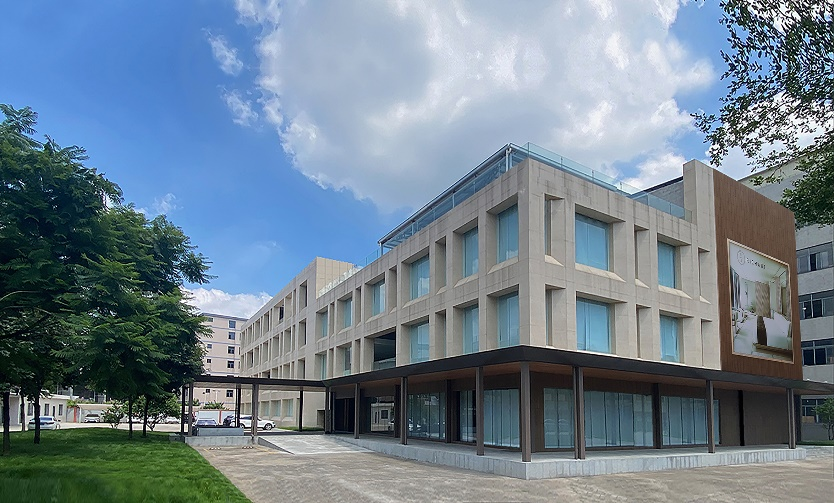
The Richang office building in Zhaoqing City, Guangdong Province — offices on the first floor with showrooms on the second and third floors for reviewing custom furniture finishes and prototypes.
Have Questions or Need More Details?
Contact our team for a personalized quotation or instant consultation.
Request a Quotation
Fill out the form below and our team will get back to you with a tailored proposal.
WhatsApp Direct Chat
Prefer to chat in real-time? Message us on WhatsApp for instant assistance & quick answers.
- Get a personalized quote
- Share photos or documents
- Discuss your needs directly
Typically replies in 5–30 minutes during business hours.