
Custom vs. Standard Hotel Furniture: A Five-Star TCO Guide
The custom-versus-standard furniture decision on a five-star project is rarely settled by the unit price on a quotation. It is settled by which route carries the property to its first refurbishment without visible compromise, forced re-design or replacement items that no longer match. This guide compares both routes head-to-head on acquisition cost, fit-out programme, in-service durability and brand alignment, then sets out how to calculate total cost of ownership across the life of the asset rather than the life of the purchase order.
The short answer: standard, catalogue or stock furniture is the lower-cost route when the approved design is close to an available item, the operator accepts that supplier's dimensions and finishes, and the area will be refurbished before wear becomes visible. Custom manufacturing becomes the stronger long-term value when room geometry, brand standards or durability requirements cannot be met by a catalogue item, and when the package must stay in service across multiple refurbishment cycles with matching replacements later. Most five-star projects end with a mixture of both, so the decision is better made area by area than once for the whole FF&E package.
Cost figures here are deliberately structural rather than numeric. Unit prices, freight and installation rates are negotiated per bill of quantities, so the framework below is built to accept your own quotes and compare them on equal terms. Manufacturer facts are taken from RICHART's documented company, capability and certification records; the reasoning about the two procurement routes is editorial and is identified as such wherever it affects a decision.
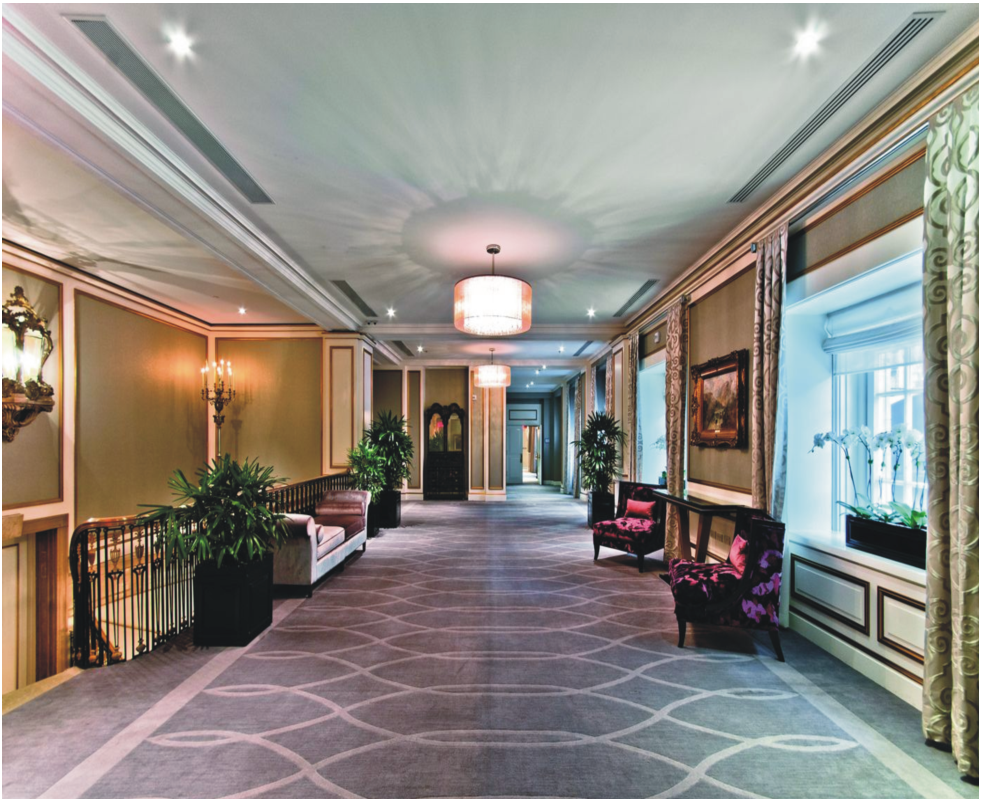
What Standard and Custom Actually Mean in a Five-Star FF&E Package
Standard furniture is a catalogue product: dimensions, finish range, hardware and upholstery options are fixed by the manufacturer or stockist, production runs are batched, and the buyer's control is limited to selection. Custom furniture is manufactured to the project's own drawings and specification, which in a five-star context usually means loose furniture for guest rooms and public areas plus the fixed and built-in elements that have to fit the architecture exactly.
RICHART, the brand of Guangdong Richang Furniture Co., Ltd., documents an ODM production mode and a customization scope that covers built-in bedboard, cabinet, wardrobe, dressing table, display shelf, bed, sofa, writing table, nightstand, dining table, stool, coffee table, sofa armchair, TV cabinet, bench and door. That list matters because the comparison is often reduced to chairs and beds when the hardest working items are wardrobes, cabinetry, vanity units and doors, where a dimensional mismatch has the largest programme consequence.
A third route, semi-custom (an existing frame with modified dimensions, finish or upholstery), sits between these two endpoints and behaves differently on approval time and tooling cost, so it deserves a separate comparison. This guide compares the endpoints only.
The Head-to-Head: Four Cost Lines That Decide the Comparison
1. Acquisition cost and the scope behind the quote
Custom carries a higher unit price per piece, because drawings, shop drawings, jigs, finish development and inspection are dedicated to one project rather than amortised across a catalogue run. The comparison only becomes meaningful when both quotes are normalised to delivered-and-installed cost, and that is where most evaluations go wrong.
RICHART's documented commercial terms give a working example of what has to be normalised: a minimum order quantity of 1 unit, delivery terms of FOB or EXW, payment by bank transfer, cash or TT, and acceptance criteria of 100% pre-shipment test. FOB and EXW both leave international freight, insurance, import duty, inland transport, site handling and installation outside the quoted figure. Those lines must be added to the standard route as well, or the custom column will look more expensive than the finished, installed asset actually is.
The standard route has its own concealed lines. Catalogue items that are close to, but not exactly, the approved design usually require site adaptation: infill joinery, plinths, scribing, re-upholstery or bespoke fixing details. Those are real costs, and they often appear mid-installation, when the design team realises the compromise is visible in a guest-facing area. Where the divergence is material, the alternative is a formal design waiver from the operator, which is a schedule risk rather than a cost line.
2. Fit-out programme and sequencing
Custom manufacturing adds approval gates that stock supply does not: shop drawing review, finish and upholstery sample approval, first-article or mock-up room sign-off, and pre-shipment inspection before the goods are released. Each gate protects quality and each gate consumes programme. RICHART quotes a production lead time of 30 to 50 days and a monthly capacity of 10,000 units, which gives a procurement team a planning anchor, provided the question of when that clock starts is answered in writing.
Ask specifically whether the 30 to 50 days begins at purchase order, at approved shop drawings, or at approved finish samples. The difference between those three answers can exceed the production window itself, and it is the single most common source of programme slippage on a bespoke package.
Standard supply is usually faster when the item is held in stock, but its timing depends on the stockist's programme and on batch availability rather than on your project schedule. There is also a phase risk that is easy to overlook: if phase two of a hotel is ordered eighteen months after phase one, the catalogue line, finish code or upholstery may have changed. That risk does not exist while a project specification is retained and re-orderable.
3. In-service durability, repair and replacement
Durability is a specification output before it is a manufacturing one. Custom allows the buyer to set materials, joint construction, finish systems and upholstery performance to the specific use zone, so a lobby sofa and a suite ottoman do not have to share the same build. Standard supply fixes those choices at the level the catalogue manufacturer considers commercially sensible across its whole customer base.
The decisive long-term factor, however, is matching. When a custom piece fails after five years, a replacement can be re-made to the retained specification. When a catalogue piece fails, replacement depends on the line still existing in the same finish, which is a genuine exposure in a property that intends to operate for twenty years between structural refurbishments.
RICHART's documented hotel project records for guest room and public area furnishing report long service life with stable quality, and long service life with low maintenance cost, among recorded project outcomes, with durable quality, customised design and eco-friendly materials listed as project highlights. Those are company-reported project notes rather than independent test results, so they should be read as evidence of the intended performance profile and of the design intent behind the specification, not as a guaranteed result for a different building.
4. Brand alignment and operator approval
Five-star brand standards are simultaneously visual and dimensional: they define proportions, silhouettes, finish families and often specific construction expectations. Where a catalogue item diverges from that standard, the choice is bespoke manufacturing or a design waiver, and waivers are easier to obtain on a back-of-house corridor than in a presidential suite.
RICHART reports that it has provided products and services to more than 500 high-star hotels worldwide, with named references including St. Regis, The Ritz-Carlton, InterContinental, W Hotels, Hyatt, Park Hyatt, Conrad, Marriott, Shangri-La, Hilton, Renaissance, Sheraton, Westin, Wyndham, Wynn, Banyan Tree, Anantara and Kempinski. A reference list does not guarantee performance on your project, but it is reasonable evidence of familiarity with brand-standard documentation, sample approval routines and inspection expectations that a purely domestic stock supplier may not have.
Comparison Table: Custom vs Standard on Eight Decision Dimensions
| Decision dimension | Standard / catalogue route | Custom route (RICHART-documented) | What it changes in the TCO model |
|---|---|---|---|
| Dimensional and design fit | Fixed dimensions and finish range; site adaptation where the fit is close | Manufactured to project drawings; scope includes built-in bedboard, cabinetry, wardrobe, casegoods, upholstery and doors | Removes adaptation and rework cost, but moves spend earlier in the programme |
| Commercial minimum | Set by the stockist or catalogue supplier | Minimum order quantity of 1 unit | Allows a single mock-up room or a partial-suite refurbishment without a volume commitment |
| Quote scope | Frequently quoted ex-warehouse | Delivery terms FOB or EXW; payment by bank transfer, cash or TT | Freight, duty, inland transport and installation must be added to both columns before comparison |
| Lead time and capacity | Dependent on stock and batch availability | Production lead time of 30 to 50 days; monthly capacity of 10,000 units | Sets the earliest realistic installation date and the size of any phased rollout |
| Quality verification | Relies on the supplier's own batch controls | 100% pre-shipment test as the stated acceptance criterion | Reduces the probability of site rejection and the re-work cost attached to it |
| Materials and systems | Declared per catalogue; documentation varies | FSC Chain of Custody DCI-COC-001074 (valid 2025-11-06 to 2030-11-05); ISO 9001:2008, ISO 14001:2004, OHSAS 18001:2007 | Supports operator ESG questionnaires and reduces the risk of a compliance-driven replacement |
| Repair and replacement | Dependent on catalogue continuity and finish availability | Re-makeable to a retained specification | Lowers the cost of the second and third replacement cycles, which is where the models usually diverge |
| Brand-standard approval | Design waiver likely where the standard diverges | Specification developed against the brand standard from the start | Trades a higher unit price for fewer approval loops and less late-stage redesign |
How to Calculate Total Cost of Ownership Across a Hotel Life
Total cost of ownership for FF&E is not a single number; it is a comparison built by applying identical inputs to both routes. The structure below is written out explicitly so that every value in it can be challenged, sourced or replaced with project data.
TCO = (A + L + I) + Σ [ M + R + P + X ] over service years + C
- A = acquisition: unit price multiplied by quantity, per area
- L = logistics: freight, insurance, import duty, inland transport
- I = installation: site handling, fixing, adaptation, snagging
- M = routine maintenance and housekeeping care per year
- R = repair and refinishing, including re-upholstery
- P = replacement of failed items, including any premium for re-making a discontinued item
- X = intervention exposure: rooms or areas out of service, and the guest-experience cost of works in a live hotel
- C = change and programme cost: redesign, failed inspection, delayed opening or delayed handover
Step 1 — Fix the comparison baseline by area
Build the bill of quantities by area rather than by product type: guest room, suite, corridor, lobby, restaurant and bar, meeting space. Wear profiles differ sharply between these areas, and a route that wins in a suite may lose in a lobby where the same piece is sat on two hundred times a day.
Step 2 — Normalise both quotes to delivered-and-installed
Convert each offer to the same delivery basis. Because RICHART quotes FOB or EXW with a 100% pre-shipment test as the acceptance criterion, the freight, insurance, duty, port charges, inland haulage and installation lines have to be added before the two columns can be read side by side. Apply the same discipline to the standard offer, including any site adaptation allowance.
Step 3 — Set service life and intervention frequency from your own evidence
Use the operator's FF&E standards, the property's maintenance logs from comparable hotels, and the refurbishment cycle in the development agreement. This is the step where generic assumptions do the most damage: a five-year upholstery cycle in a resort lobby is not the same as a nine-year cycle in a business hotel suite, and neither should be imported from a supplier brochure.
Step 4 — Price the intervention, not just the replacement
The cost of replacing a wardrobe is not the price of the wardrobe. It is the wardrobe, the removal, the making good of the wall and floor, the room nights lost while the work happens, and the guest disruption if the property is trading. In a custom package, the replacement is normally matched and re-made; in a standard package, the risk premium sits in sourcing a matching item or accepting a visible mismatch.
Step 5 — Add change and programme cost
Custom projects carry a defined approval chain, and every loop in that chain has a schedule cost. Standard projects carry a different one: late discovery that the catalogue item does not fit, followed by adaptation or waiver. Both belong in the model as C, and both should be estimated from the actual programme rather than treated as zero because they are inconvenient to quantify.
Step 6 — Convert to cost per key per year
Divide the total by room count and service years. A cost per key per year figure lets a procurement team compare a custom guest room package with a standard one on the same basis, and it lets the development team compare furniture spend with other lifecycle costs inside the asset model. It also exposes the one question that decides most of these evaluations: does the custom route avoid at least one replacement or refurbishment round in a high-wear area?
No default multipliers, percentages or benchmark prices are published in this guide. Any weighting applied in your model must come from your own project data, your supplier quotations or the operator's standards, and should be written down as a stated assumption so the comparison can be audited later.
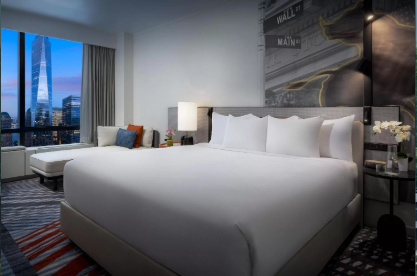
When Custom Is Executable, Not Just Desirable: Capability Evidence
Guangdong Richang Furniture Co., Ltd. was founded in 1990 and operates from a 100,000 square metre factory in the Dawang Hi-Tech Industrial Park in Zhaoqing, Guangdong Province, with 1,000 employees, a 100-engineer research and development team and a reported annual output value of 500,000,000 CNY. Exports account for 60% of revenue, with documented markets in the USA, the EU, Southeast Asia, the Middle East and China.
Those figures matter to the custom-versus-standard decision for specific reasons. A 100-engineer team is the capacity that turns a designer's intent into buildable shop drawings and resolves site conditions without redesigning the piece. A monthly capacity of 10,000 units is what makes a phased rollout across several hundred keys realistic within one programme window. A minimum order quantity of 1 unit is what allows a mock-up room, a sample suite or a partial refurbishment to be ordered before the full package is released. And a 60% export share indicates routine handling of export packing, documentation and inspection routines, which a buyer should still verify against the specific destination market.
The boundary is equally important. Capability evidence describes a factory and its systems; it does not describe the outcome of your project. Before award, ask for the project-specific quality plan, the inspection hold points, the shop drawing timetable and the name of the engineer who will own the package.
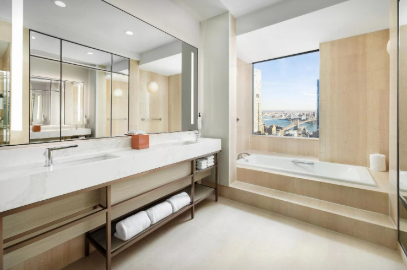
Where the Standard Route Still Wins
A credible comparison has to state when custom is the wrong answer. The standard route is usually the better commercial decision in the following situations:
- Short remaining asset life. If the building will be redeveloped or reflagged before the first refurbishment, custom durability has no time to pay back.
- Low-wear areas. Back-of-house offices, staff areas and service corridors rarely justify bespoke construction where the operator's standard permits catalogue supply.
- Programmes with no room for approval loops. Where the opening date is fixed and drawing and sample approval cannot be scheduled, a catalogue item that fits reasonably well may be the only executable option.
- Areas covered by a group purchasing agreement. Where an operator maintains a compliant standard range, deviating from it adds approval work without adding guest value.
- Capital timing. Custom production starts against approved drawings, so commitment comes earlier in the programme than it does for stock supply.
- Weak specifications. A poorly specified custom package produces expensive furniture that still fails. Custom amplifies specification quality in both directions.
Execution Checks Once the Route Is Chosen
Whichever route wins, the same four items should appear in the purchase order: delivery basis, acceptance criteria, payment terms and warranty scope. RICHART's documented terms are FOB or EXW, a 100% pre-shipment test, and payment by bank transfer, cash or TT; these are the terms that determine how much risk sits with the buyer between the factory gate and the installed room.
Warranty scope belongs in the cost model because it defines what sits inside your maintenance line and what does not. RICHART's documented after-sales terms provide remote technical support, a one-year Three Guarantees period for furniture products, six months for spontaneous breakage, mould or fogging of glass and mirrors, and two years for active wood borer infestation on panel materials, with any separate enterprise commitment prevailing and applicable furniture standards applying where they exist. Anything outside those windows is an operating cost you should forecast.
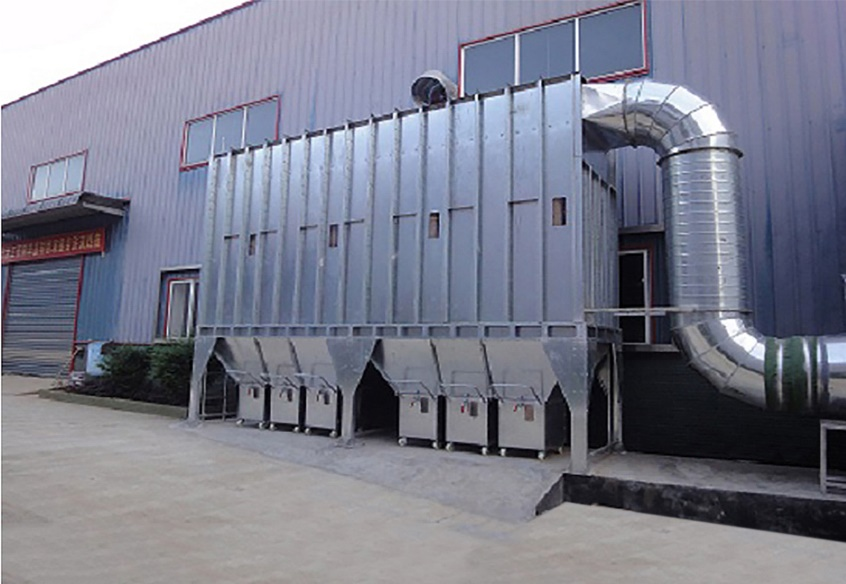
Certification should be read for what it actually covers. The FSC Chain of Custody certificate DCI-COC-001074, issued by DCI Certification Ltd on 6 November 2025 and valid until 5 November 2030 with worldwide scope, covers the chain-of-custody system across markets including China, the United States, Saudi Arabia, the United Arab Emirates, Tanzania, the United Kingdom, France, Canada, Australia and Japan. The ISO 9001:2008 quality, ISO 14001:2004 environmental and OHSAS 18001:2007 occupational health and safety management systems cover process discipline, and RICHART's workshop environmental protection and purification equipment supports that environmental system, with ISO 14001 certification recorded as early as 2006. None of these is a product fire or performance test report, so project-specific test evidence must still be requested against the operator's FF&E standard.
Frequently Asked Questions
Do five-star hotel projects require certified furniture, and what can a supplier actually document?
The requirement comes from the hotel brand standard and the local building code, so it varies by operator and jurisdiction. What a manufacturer can document is the credential layer: RICHART holds FSC Chain of Custody certificate DCI-COC-001074, issued by DCI Certification Ltd on 6 November 2025 and valid until 5 November 2030 with worldwide scope, and operates ISO 9001:2008 quality, ISO 14001:2004 environmental and OHSAS 18001:2007 occupational health and safety management systems. Those are chain-of-custody and management-system credentials; they do not substitute for project-specific fire or performance test evidence, which the buyer must confirm against the operator's FF&E standard before the order is placed.
Can a custom manufacturer deliver a whole FF&E package rather than only bedroom casegoods?
It depends on the factory's documented scope. RICHART's customization scope covers built-in bedboard, cabinet, wardrobe, dressing table, display shelf, bed, sofa, writing table, nightstand, dining table, stool, coffee table, sofa armchair, TV cabinet, bench and door, produced under an ODM model in a 100,000 square metre factory with a 100-engineer R&D team and a monthly capacity of 10,000 units. That range spans guest room, suite, lobby and public area packages. For phased rollouts, ask for capacity allocation per phase to be confirmed in writing.
Is custom furniture more expensive than standard furniture over the life of a five-star hotel?
It is normally higher on acquisition cost, and only your project data can answer the lifecycle question. Compare delivered-and-installed cost per area, then add maintenance, repair, replacement and intervention exposure across the service years of the property. Custom allows specification to the use zone and matching replacement later, which reduces the cost of the second and third replacement cycles. Standard supply is cheaper to buy and cheaper to abandon, which suits short-hold assets and low-wear areas. If the custom route avoids one replacement round in a high-wear area, the gap narrows quickly; if it does not, standard usually wins.
How are samples and pre-shipment approval handled before a custom order is released?
The approval chain normally runs from shop drawings to finish and upholstery samples, then to a first-article or mock-up room, then to pre-shipment inspection. RICHART's documented terms include a minimum order quantity of 1 unit and an acceptance criterion of 100% pre-shipment test, which means the goods are inspected before they leave the factory rather than on site. Sample cost, sample lead time and the number of approval rounds are project-specific and should be written into the purchase order, together with the hold points at which production cannot proceed without written sign-off.
How much lead time should a five-star project allow for custom furniture, and where do the figures come from?
RICHART quotes a production lead time of 30 to 50 days. That window covers production, not the whole programme: drawing approval, sample approval, export packing, ocean or air freight, customs clearance and installation sequencing sit outside it. Confirm in writing whether the 30 to 50 days starts at purchase order, at approved shop drawings or at approved samples, then add shipping and installation to reach an on-site date. The quickest way to convert these figures into a schedule you can defend is to send the bill of quantities and area drawings to RICHART for a project-specific timetable.
Conclusion: Decide by Area, Model the Life, Then Commit
The custom-versus-standard question is not a contest between craft and economy. It is a question of where each route's cost structure fits the specific area, the specific service life and the specific brand standard. Standard furniture wins where the design is close to a catalogue item, the wear is light and the asset will be redeveloped before durability pays back. Custom manufacturing wins where geometry, brand alignment or durability cannot be met by a catalogue item and the package must survive multiple refurbishment cycles with matching replacements.
The discipline that separates a good decision from an expensive one is normalisation. Put both routes on a delivered-and-installed basis, apply the same service life and intervention assumptions, add the change and programme cost, and convert the result to cost per key per year. Once that model exists, the decision usually stops being a matter of opinion and becomes a matter of which assumptions the development team is willing to sign.
Next step for procurement teams. If your project is heading toward a bespoke package, the most useful next inputs are the area-by-area bill of quantities, the operator's FF&E standard and a target installation window. RICHART, the brand of Guangdong Richang Furniture Co., Ltd., works from an MOQ of 1 unit and a 100% pre-shipment test standard, which allows a single mock-up room to be produced and inspected before the full order is released. You can review the manufacturer's profile and project references at RICHART, and download the product catalogue as a PDF from the RICHART catalogue download.
Have Questions or Need More Details?
Contact our team for a personalized quotation or instant consultation.
Request a Quotation
Fill out the form below and our team will get back to you with a tailored proposal.
WhatsApp Direct Chat
Prefer to chat in real-time? Message us on WhatsApp for instant assistance & quick answers.
- Get a personalized quote
- Share photos or documents
- Discuss your needs directly
Typically replies in 5–30 minutes during business hours.