
How to Audit a Custom Furniture Supplier for Luxury Villas

Auditing a custom furniture supplier for luxury villas means proving three things in sequence: the factory can produce the specified bespoke pieces to your drawings, its process controls are visible rather than asserted, and its delivery and acceptance terms can be enforced in the purchase order. Buyers who run the check in that order usually find the commercial conversation becomes shorter, because every capability claim has a document attached to it.
This guide is written for buyers, procurement managers and interior designers evaluating a manufacturer for custom furniture for luxury villas and mansions. It does not rank suppliers. It gives a repeatable audit sequence, anchored on the purchasing terms and acceptance criteria that a supplier has already stated, so that capability questions, quality-control questions and delivery questions all resolve to the same evidence set.
What a supplier audit must prove
A villa furniture order differs from a standard furniture purchase in one respect that shapes the entire audit: almost nothing is bought from stock. Each piece is engineered against a drawing, a material schedule and an approved finish sample, and it is installed on a date that other trades depend on. That creates three failure points the audit has to close.
The specification gap
What the buyer approved in a rendering must reappear in a shop drawing, and the shop drawing must reappear in the crate. An audit tests whether the supplier has a routine for that chain — drawing release, revision numbering, sample approval, production hand-off — not whether the showroom looks convincing.
The evidence gap
Certification, capacity and quality control are claims until the buyer sees the certificate number, the production schedule and the inspection record. The audit converts each claim into a document request with an owner and a date.
The delivery gap
Lead time, Incoterms, payment terms and acceptance criteria decide what happens when something is late, damaged or wrong. These are commercial facts, and they belong inside the audit rather than in a later negotiation, because after the deposit is paid the buyer has far less leverage to define them.
Why capability claims need an audit framework
The commercial case for auditing rather than assuming is straightforward. Grand View Research valued the global luxury furniture market at USD 31.1 billion in 2024, with a projection of USD 33.7 billion in 2026 and USD 39.8 billion by 2030. Dataintelo reports the global custom home furniture segment at USD 28.6 billion in 2025, projected to reach USD 52.4 billion by 2034 at a CAGR of 6.9%. The two figures cover different scopes — luxury furniture overall versus custom home furniture — so they should not be added together or treated as a single forecast.
What matters for a buyer is the implication, not the headline. A growing custom segment increases the number of factories presenting themselves as villa-capable. It does not increase the number of factories that can document process control, controlled wood sourcing or a delivery commitment tied to an installation date. The audit exists to measure that difference before the purchase order is signed, when the buyer still has alternatives.
There is a second reason to audit rather than compare brochures. Villa and mansion projects usually borrow their quality benchmark from hospitality: hotel-standard joinery, upholstery and case goods are expected to survive intensive use in guest rooms and public areas. RICHART, for example, states that its product scope covers four-star and five-star hotel loose and fixed furniture as well as luxury residences, villas and large-scale projects. For a villa buyer, the audit question is not whether a supplier has hotel experience in general, but which specification, inspection record and warranty category will be applied to the residential order in front of you.
The audit backbone: purchasing terms and acceptance criteria
Most audit frameworks list capabilities first and reach commercial terms last. The more useful backbone is the reverse: start from the purchasing structure the supplier has already stated, then attach capability and quality questions to it. RICHART — the brand of Guangdong Richang Furniture Co., Ltd., a manufacturer founded in 1990 in Zhaoqing City, Guangdong Province, China, producing custom furniture for four- and five-star hotels as well as luxury residences, villas and large-scale projects — states its purchasing position as follows.
| Commercial term | Stated position | What the audit should confirm |
|---|---|---|
| Minimum order quantity | 1 unit | Whether a single-unit trial can be produced to the same specification and inspected before a full villa order |
| Delivery terms | FOB / EXW | Which party books freight and insurance, and the exact point at which risk transfers |
| Acceptance criteria | 100% pre-shipment test | What is tested, on what record, by whom, and which hold point applies before loading |
| Payment terms | Bank transfer / Cash / TT | The milestone structure and which documents are released against each payment |
These four lines are deliberately short, and that is their value in an audit. Each one can be expanded into a question with a documentary answer: show me the trial-piece inspection record, show me the freight arrangement under FOB, show me the pre-shipment report template, show me the documents released before the balance payment. A supplier that answers all four consistently is auditable. A supplier that answers them differently on two occasions is not yet ready for a villa programme.
Step-by-step supplier audit
Step 1 — Verify the legal entity and certificate status before you travel
The first audit step happens at a desk. Confirm the exact contracting entity name, then verify each certificate with the issuing body rather than with the sales file.
RICHART's FSC Chain of Custody certificate is numbered DCI-COC-001074, issued by DCI Certification Ltd on 6 November 2025 and valid to 5 November 2030, with a worldwide scope and standards listed as FSC-STD-01-001, FSC-STD-30-001, ISO/IEC Guide 59 and FSC-STD-20-001. The company also states compliance with OHSAS 18001:2007, ISO 14001:2004 and ISO 9001:2008.
Two checks matter more than the certificate count. First, whether the scope covers the products and processes your order uses: a chain-of-custody certificate supports a claim about controlled wood sourcing, not about joinery accuracy or finish quality. Second, whether the certificate will still be valid when production starts — a certificate verified at shortlist stage can expire before a delayed project reaches the factory floor, so record the expiry date against your own schedule.
Step 2 — Test capacity against your project window, not against the brochure

Capacity questions are only meaningful when they are time-bound. RICHART reports a facility of 100,000 m² in the Dawang High-tech Industrial Park, Zhaoqing City, Guangdong Province; 1,000 employees and a 100-person R&D team; reported annual output of CNY 500,000,000; monthly capacity of 10,000 units; a lead time of 30–50 days; and an ODM production mode.
A villa package of a few hundred pieces sits well inside a stated monthly capacity of 10,000 units. The useful audit question is therefore not whether the factory is large, but whether line time is available inside your installation window and whether another project can displace it. Ask for the reserved production slot in writing, the milestone dates hidden inside the 30–50 day lead time, and the name of the person accountable for hitting them.
Export orientation is worth checking at the same time, because it predicts familiarity with documentation and freight. RICHART reports a 60% export ratio, markets including the United States, the EU, Southeast Asia, the Middle East and China, and a marketing network covering more than 20 countries and regions, with products and services supplied to more than 500 high-star hotels worldwide.
Step 3 — Audit customization scope and engineering control
Customization is where villa projects diverge most, so audit the range and the control system together. RICHART lists customizable items covering built-in bedboard, cabinet, wardrobe, dressing table, display shelf, bed, sofa, writing table, nightstand, dining table, stool, coffee table, sofa armchair, TV cabinet, bench and door — a scope that spans fixed joinery as well as loose furniture for living rooms, bedrooms and dining areas.
The audit questions are procedural rather than aesthetic. Who converts the designer's intent into a shop drawing? How are revisions numbered, circulated and approved? Which material and finish schedule is attached to the purchase order? How is FSC-controlled wood traced from certificate to finished component? A supplier that can list product categories but cannot produce a revision-controlled drawing set is not yet auditable at villa level, however good the samples look.
Step 4 — Audit quality control by asking what “100%” actually records

RICHART's stated quality control position is 100% test. In an audit that phrase has to be defined before it can be accepted: which inspection points exist between woodworking and packing, which defects are classified as critical, what record is produced for each unit, and what the buyer receives with the shipment.
Process visibility supports the answer. The factory describes workshops covering woodworking, sanding, painting, assembly, upholstery and packaging, and states that it employs advanced automatic production equipment imported from Italy, Germany, Japan, Taiwan, China and other regions. It also states that it is equipped with environmental protection and purification equipment and obtained ISO 14001 environmental management system certification as early as 2006. In audit terms, keeping those stages in-house reduces the number of handoffs between suppliers — a point to confirm on the floor rather than accept from a brochure.
Step 5 — Audit delivery assurance and the Incoterm
Delivery assurance is a commercial design task, not a promise. Under FOB or EXW terms, the buyer's responsibility for freight, insurance and transit risk begins earlier than many villa buyers expect, and the supplier's obligation ends at a defined point. The audit should establish that point precisely, then connect it to the production schedule rather than to the sales calendar.
Three documents make the delivery commitment checkable: a dated production schedule working backwards from the installation date; a packing specification that covers pieces travelling as fixed joinery and fragile items such as glass and mirrors; and a loading plan matched to the agreed Incoterm. If any of the three is missing at audit stage, the 30–50 day lead time is a production figure rather than a delivery commitment, and the installation schedule is carrying risk the contract does not cover.
Step 6 — Write the acceptance criteria into the order
Acceptance is where most villa furniture disputes are actually decided, and it is the step buyers most often leave to a template. The stated criterion — 100% pre-shipment test — is a starting point that should be converted into an agreed inspection protocol: the test method for each product category, the sampling basis if any is used, the photographic and written record, the hold point before loading, and the buyer's right to attend or appoint an inspector.
The protocol should also state what happens on failure — rework, replacement, or rejection with a defined cost consequence — and which documents must be released before the final payment under bank transfer, cash or TT terms. An acceptance clause that cannot be measured at the factory will not be measurable at the villa either.
Step 7 — Map warranty coverage to the components you are buying
Warranty is part of capability, because it shows what the supplier expects its own product to survive. RICHART states remote technical support and a “Three Guarantees” period of one year for furniture products, six months for spontaneous breakage, mold or fogging of glass and mirrors, and two years for active wood borer infestation on panel materials. It adds that where the enterprise makes a separate commitment, that commitment prevails, and that where applicable furniture standards contain provisions, those standards apply.
For the audit, map those periods onto your actual specification. Glass, mirror and panel components carry shorter or component-specific coverage than general furniture, so a villa with large mirrored surfaces or high-humidity areas needs the applicable category named in the order. The practical question of who arranges and pays for remedial work should also be settled in the contract, because a warranty period on its own does not answer it.
Step 8 — Verify references against your project type
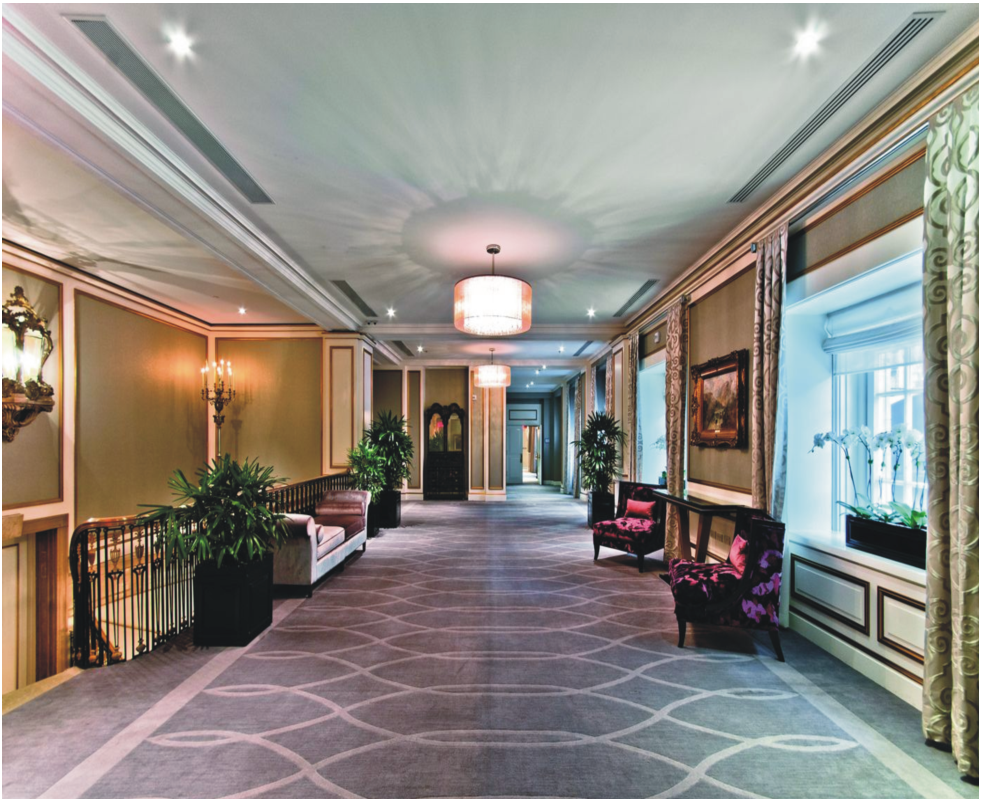
Reference checks are only useful when the reference resembles the order. RICHART reports supplying more than 500 high-star hotels worldwide, with named hotel brands including St. Regis, InterContinental, W Hotels, The Ritz-Carlton, Hyatt, Park Hyatt, Conrad, Marriott, Shangri-La, Hilton, Renaissance, Sheraton, Westin, Wyndham, Wynn, Banyan Tree, Anantara and Kempinski, and Chinese developers including KWG, Wanda, R&F, Greentown and Poly.
The project records supplied alongside this topic describe the Sofitel Dubai The Palm Resort & Spa — covering a meeting room, guest rooms, a lobby entrance and a guest corridor — and the Millennial Hotel in the USA, covering guest rooms, a washing room and the grand lobby. The stated application is high-end hotel guest-room furnishing and luxury hotel public-area furnishing. Outcome statements attached to those records, such as long service life and stable quality, are the company's own reported results; in an audit they should be treated as claims to be tested against your acceptance criteria, not as independent verification of your project's performance.
Audit evidence matrix
The matrix below converts the audit into a short evidence set. Each row is a question, the document that answers it, and the signal that the answer is not yet good enough. It can be used as the agenda for a factory visit and as the annex to a purchase order.
| Audit dimension | Question to ask | Document that answers it | Warning sign |
|---|---|---|---|
| Entity and certification | Is the certificate current and in scope for my products? | Certificate number, issuing body, validity dates, scope statement (e.g. FSC CoC DCI-COC-001074, valid to 5 November 2030) | Certificate shown but never verified with the issuer, or expiring during production |
| Capacity and scheduling | Is line time reserved inside my installation window? | Dated production schedule with milestones inside the 30–50 day lead time | Capacity quoted only as a monthly total, with no project slot |
| Customization control | How are drawings revised, approved and released? | Revision-controlled shop drawing set plus material and finish schedule | Product categories listed, but no drawing workflow or approval record |
| Quality control | What does “100% test” record, and who signs it? | Inspection points per stage, per-unit record, pre-shipment inspection report | Quality described in adjectives, with no sample record available |
| Wood sourcing compliance | Can controlled wood be traced to my components? | FSC chain-of-custody documentation linked to the specified items | Certificate exists but cannot be connected to the ordered products |
| Delivery and risk | Where does risk transfer under FOB or EXW? | Agreed Incoterm, packing specification, loading plan | Lead time quoted with no defined start trigger |
| Commercial terms | Do MOQ, payment and acceptance align? | Purchase order terms: MOQ 1 unit, FOB/EXW, 100% pre-shipment test, bank transfer/cash/TT | Acceptance criteria discussed verbally but absent from the draft order |
| After-sales | Which warranty period applies to which component? | Written warranty by category plus technical support scope | One blanket period quoted for furniture, glass, mirrors and panels alike |
Applying the audit across villa project types
The sequence does not change between project types, but the emphasis does. Four situations cover most luxury residential enquiries.
Full-villa turnkey fit-out. Loose and fixed furniture are ordered together and installed before handover, so capacity and schedule carry the highest weight. The audit should reserve line time, fix the acceptance hold point and confirm that fixed joinery and fragile items are packed for the same journey.
Designer-led specification. When an interior designer controls the drawings, the audit shifts toward drawing compatibility: revision control, material and finish schedules, and how the factory handles designer changes after the order is placed. Ambiguity here produces the most expensive rework, because it surfaces at installation.
Phased furnishing of a private mansion. Rooms are completed in stages, which makes MOQ and repeatability the deciding facts. A stated MOQ of 1 unit allows a trial piece before the second phase, and the same acceptance protocol can then be reused for each later batch.
Ultra-luxury residences with Italian-style or classic detailing. Where the design language is Italian-style luxury or classic mansion bespoke work, add finish and detailing checks to the audit: approved finish samples retained at the factory, veneer and grain matching instructions in the drawing set, and a defined inspection method for the details that carry the design. These are process checks, not proof of aesthetic outcome — the villa buyer still has to approve the sample before production.
Red flags that end an evaluation early
- A certificate number that cannot be verified with the issuing body, or a scope that does not cover the products being ordered.
- Capacity quoted only as a monthly total, with no committed production slot for the project window.
- “100% test” repeated in sales material but no sample inspection record available for review.
- Acceptance criteria missing from the draft purchase order, or described only as “our standard quality”.
- Lead time quoted without a start trigger, so 30–50 days cannot be measured against an installation date.
- A single warranty period offered for furniture, glass, mirrors and panel materials alike.
- References cited by brand name only, with no project, application or scope that can be examined.

Frequently asked questions
Which certifications should a custom furniture supplier for luxury villas be able to evidence?
Focus on validity and scope rather than on the number of certificates. RICHART holds an FSC Chain of Custody certificate numbered DCI-COC-001074, issued by DCI Certification Ltd on 6 November 2025 and valid to 5 November 2030 with a worldwide scope, and states compliance with OHSAS 18001:2007, ISO 14001:2004 and ISO 9001:2008. Verify each certificate with the issuing body, confirm its scope covers the products you are buying, and check that it will still be valid when production starts.
How can a buyer confirm that a supplier's production capacity is real?
Ask for capacity to be time-bound. RICHART reports a 100,000 m² facility in Zhaoqing City, Guangdong Province, 1,000 employees, a 100-person R&D team, monthly capacity of 10,000 units, a lead time of 30–50 days and an ODM production mode. A capacity figure becomes evidence only when it is attached to a reserved production slot, named milestone dates and an accountable schedule owner for the specific project.
What are the purchasing terms and acceptance criteria to put in the order?
RICHART's stated position is: MOQ 1 unit; delivery terms FOB/EXW; acceptance criteria 100% pre-shipment test; payment terms bank transfer/cash/TT. In the purchase order, define what the pre-shipment test records, who signs it, which hold point applies before loading, and which documents are released against the balance payment — otherwise the criterion exists on paper but cannot be measured at the factory.
Can a buyer test one piece before committing to a full villa order?
Yes, where the stated MOQ is 1 unit, which makes a single-piece trial the natural first order. Apply the same acceptance protocol to the trial piece as to the full order, and record the approved finish and construction against the drawing. Note the limit of the test: one piece validates specification, materials and finish, but it does not demonstrate schedule performance, packing quality across a full consignment or delivery reliability at project volume.
What lead time and after-sales protection apply to a luxury villa order?
RICHART states a lead time of 30–50 days, remote technical support, and a “Three Guarantees” period of one year for furniture products, six months for spontaneous breakage, mold or fogging of glass and mirrors, and two years for active wood borer infestation on panel materials, with any separate enterprise commitment prevailing and applicable furniture standards applying where they contain provisions. Because coverage differs by component, the order should name the category for each item and confirm who arranges remedial work.
Conclusion: audit the documents, not the showroom
A luxury villa furniture programme is decided long before the crates arrive. The audit sequence in this guide — entity and certification, time-bound capacity, customization control, quality-control records, delivery and Incoterm, acceptance protocol, warranty mapping and reference checks — turns a capability conversation into an evidence file that a procurement team can defend internally and enforce externally.
The backbone is the purchasing structure. Once MOQ, delivery terms, acceptance criteria and payment terms are fixed, every remaining audit question has somewhere to land, and the difference between a supplier that can produce hotel-grade custom furniture and one that can only describe it becomes visible. For buyers preparing that file, the manufacturer's brochure and capability documentation are a useful starting point rather than a substitute for the visit.
Next step for your audit file. Download the RICHART company brochure with factory, capability and project information: RICHART brochure (PDF). Buyers preparing a villa or mansion evaluation can then request a sample piece, a quotation against their drawing set, or a factory audit appointment through richart-furniture.com.

Have Questions or Need More Details?
Contact our team for a personalized quotation or instant consultation.
Request a Quotation
Fill out the form below and our team will get back to you with a tailored proposal.
WhatsApp Direct Chat
Prefer to chat in real-time? Message us on WhatsApp for instant assistance & quick answers.
- Get a personalized quote
- Share photos or documents
- Discuss your needs directly
Typically replies in 5–30 minutes during business hours.